Contents
- The Cuban Heel: What It Actually Does
- Men's Latin, Standard and Practice Side by Side
- What Makes It a Dance Shoe and Not a Dress Shoe
- Men's Lasts, Width and Instep
- Leather, Patent and Nubuck
- What to Wear Inside the Shoe
- Buying Your First Men's Pair
- Keeping Leather and Patent Right
- Frequently Asked Questions
Most dance shoe writing is built around the women's range, where the choices — heel height, satin or patent, strap or court shoe — are visible at a glance. Men's shoes look plainer, so they get treated as an afterthought, and men end up dancing in a dress shoe or in a pair a size too big. The decisions are just as specific; they are simply hidden in the heel, the last and the sole.
This guide covers what is specific to men: the Cuban heel, how men's lasts fit, the materials we actually build in, and what to put on your feet inside the shoe. Browse men's Latin shoes or men's Standard shoes if you already know your discipline.
The Cuban Heel: What It Actually Does
In women's shoes Latin and Standard heel heights overlap, and the shape does most of the work. Men's shoes split cleanly: the heel tells you the programme before anything else does.
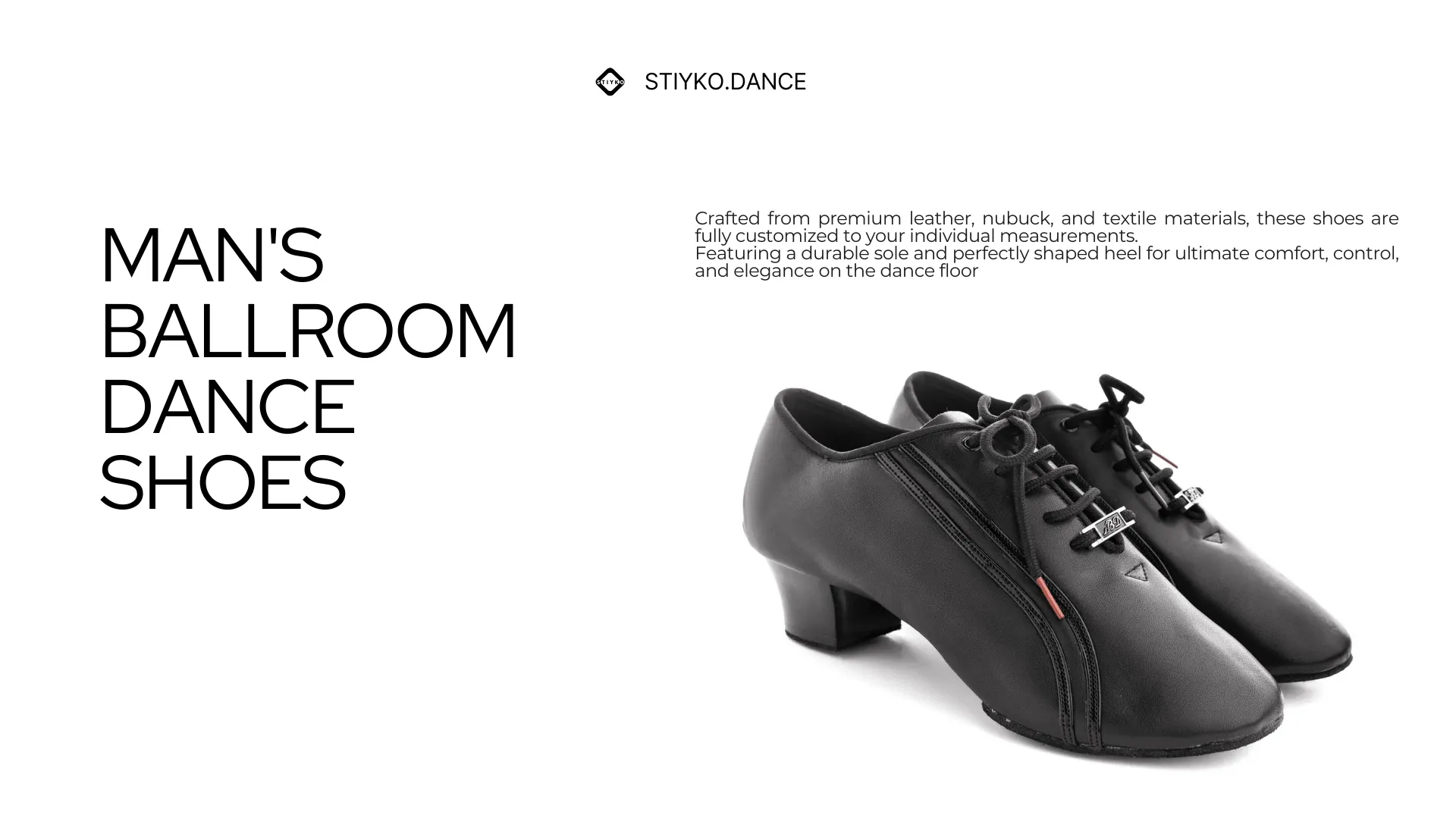
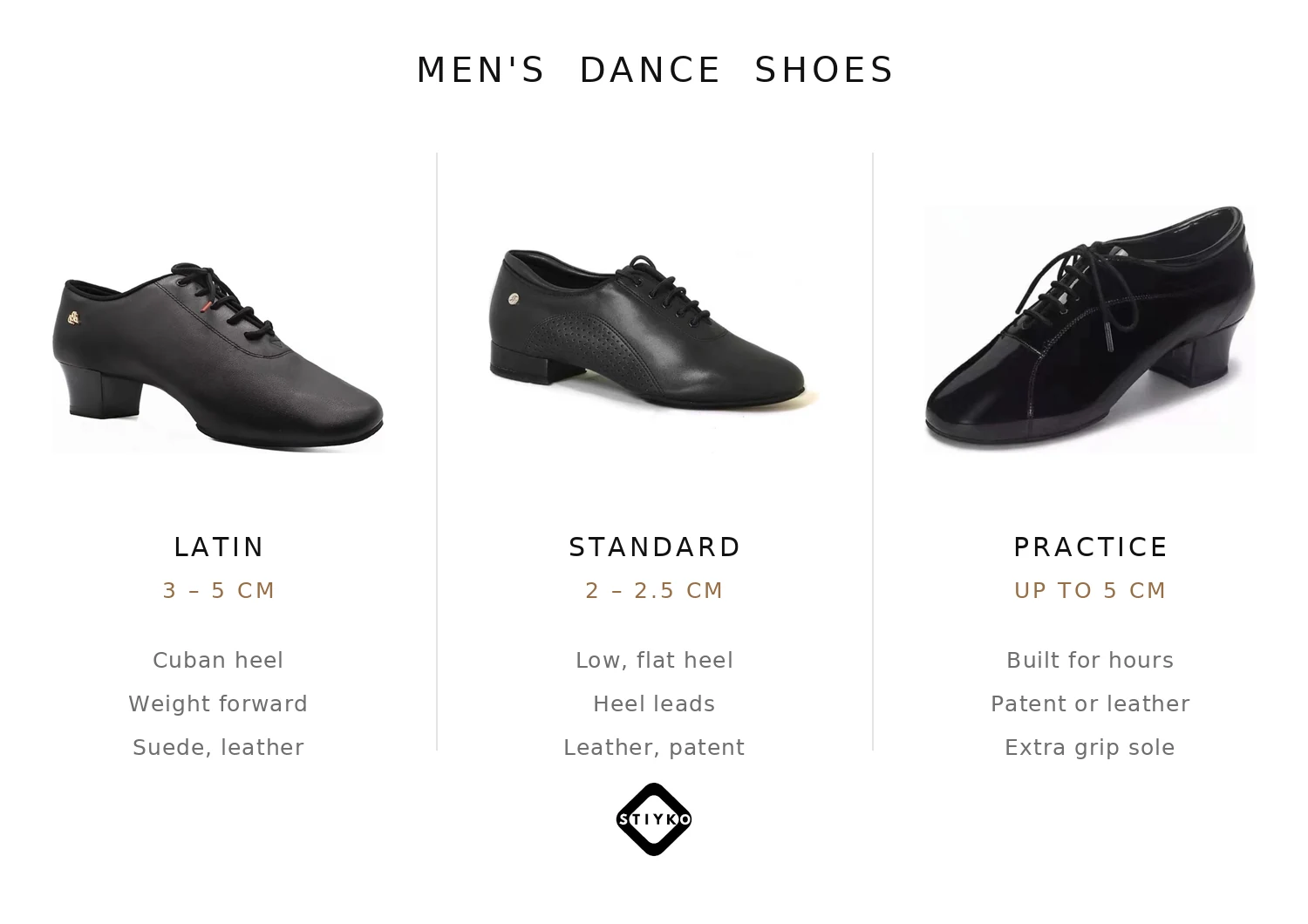
- Latin — a 3–4.5 cm Cuban heel. Stacked, slightly tapered, set under the heel bone. It tips your weight onto the ball of the foot and holds it there, which is the position Latin hip action and fast footwork are danced from. You do not have to push forward against the shoe; the shoe has already put you there.
- Standard — a flat 2–2.5 cm heel. A broad, low block that keeps you level and stable through the long travelling figures of Waltz, Tango, Foxtrot and Quickstep, where you move as one frame with a partner and cannot afford to be tipped forward.
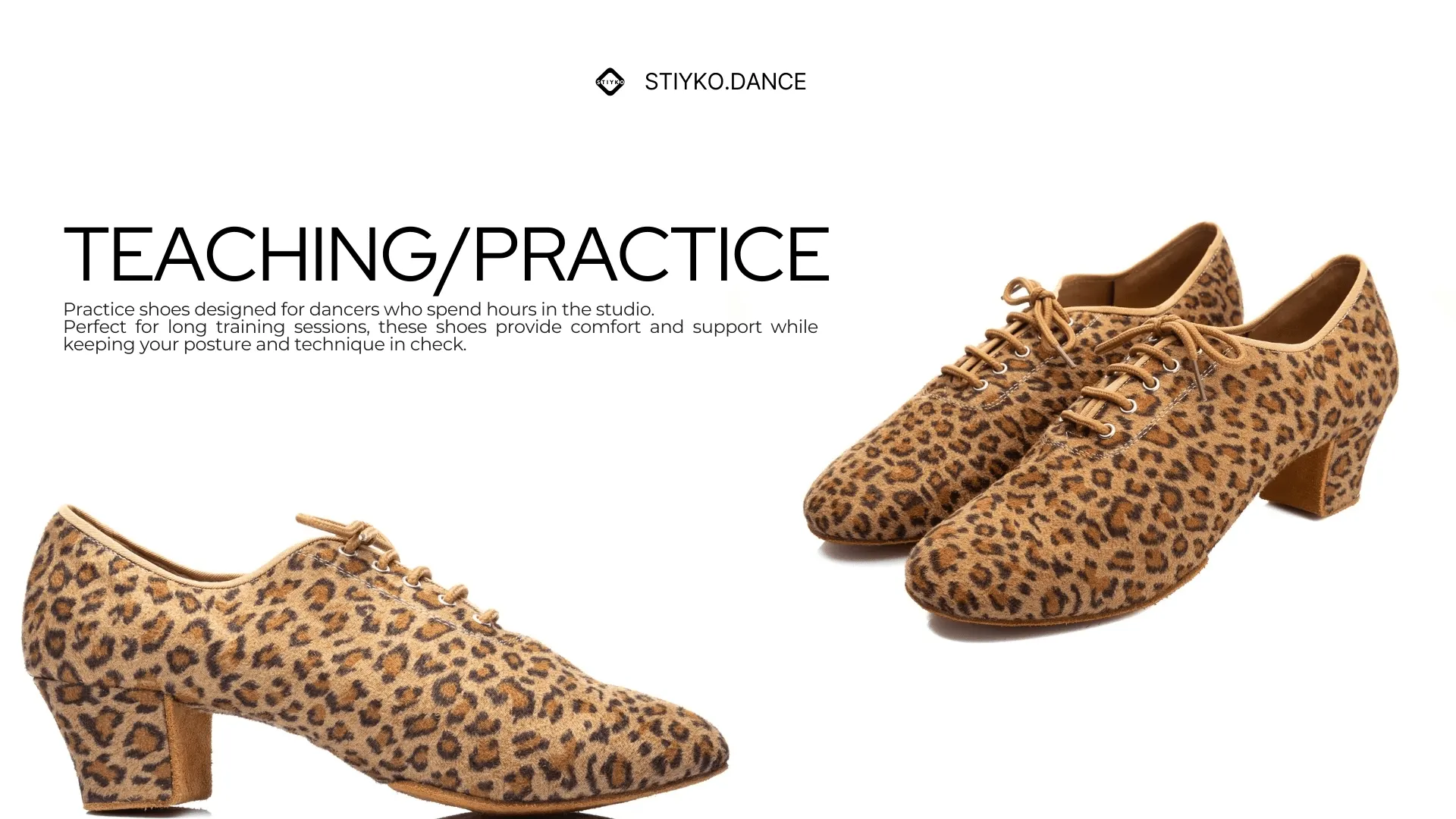
- Practice — up to 5 cm, but built differently. Broader base, more cushioning, a sole that survives repetition rather than one tuned for a competition floor.
This is why a Latin man and a Standard man do not swap shoes. It is not a style convention — the heel has physically placed their weight in two different places.
Men's Latin, Standard and Practice Side by Side
| Heel | Sole | Upper | Closure | |
|---|---|---|---|---|
| Latin | 3–4.5 cm Cuban | Split suede | Soft leather | Laces |
| Standard | 2–2.5 cm flat | Full suede | Patent or leather | Laces |
| Practice | Up to 5 cm, broad | Cushioned suede | Hard-wearing leather | Laces or elastic |
What Makes It a Dance Shoe and Not a Dress Shoe
From across the room a men's dance shoe looks like a plain black oxford. Three things separate them, and all three matter more than the look:
- A suede sole. It grips and releases in a controlled way on a wooden floor. A leather or rubber street sole either sticks — which is how ankles and knees get hurt in a pivot — or slides out from under you.
- A flexible shank. The shoe bends with the foot through the ball, so you can roll through a step. A dress shoe is built to stay rigid.
- A dance last. Narrower through the heel, closer around the instep, so the foot does not move inside the shoe when you turn. A dress shoe is cut for standing and walking.
The suede sole is also the reason these shoes never go outside. One walk to the studio on pavement takes the nap off, and the grip does not come back.
Men's Lasts, Width and Instep
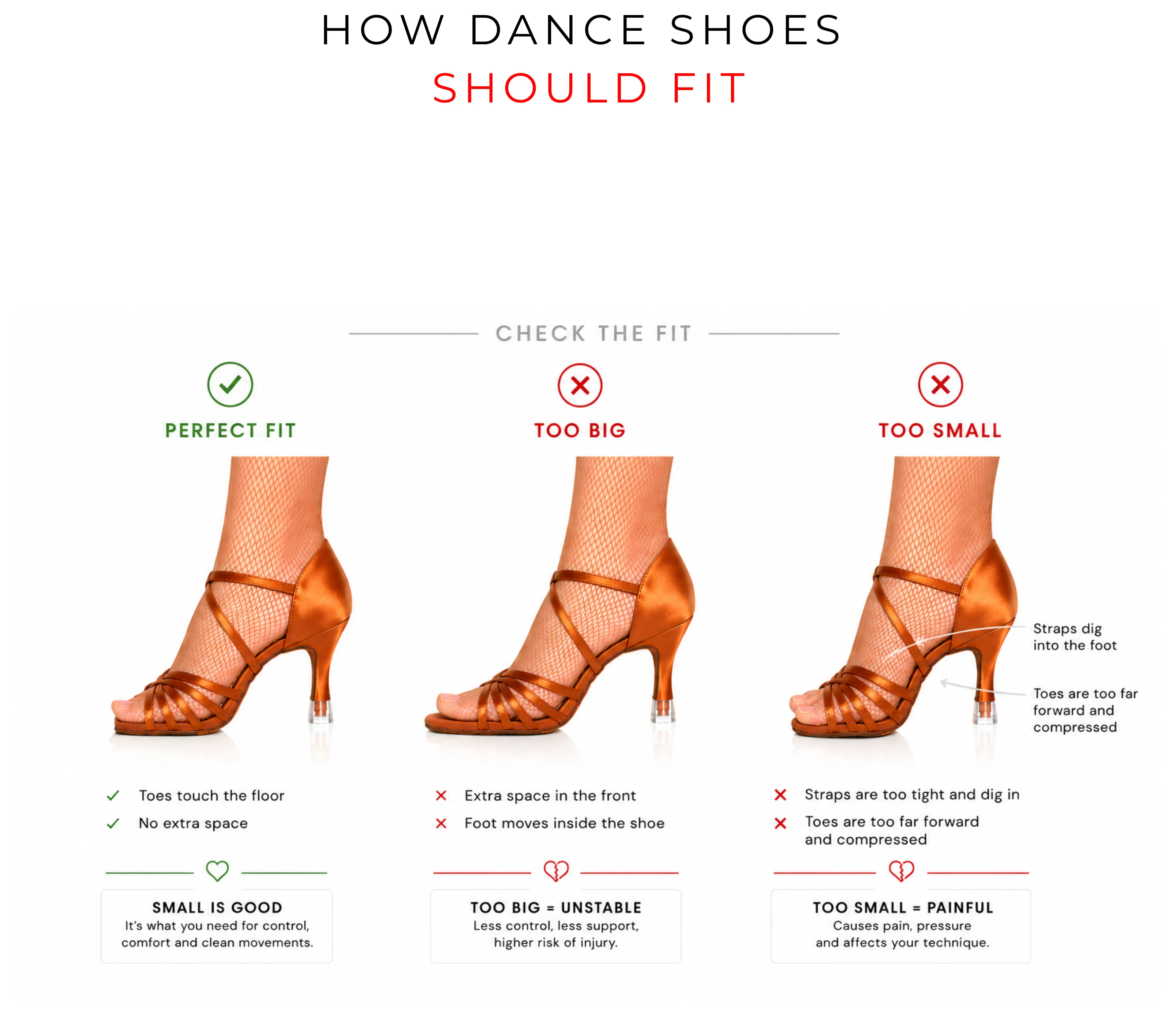
Men's feet fail differently from women's. The usual problems are a wide forefoot in a shoe that was cut narrow, and a high instep that the lacing crushes before the length is even wrong. Both feel like "the shoe is too small" and both are solved by a different last, not a bigger size.
- Wide forefoot: look for a wider fitting rather than sizing up — length you do not need is worse than width you do.
- High instep: loosen the lower eyelets rather than the whole lacing, so the heel stays held.
- Heel lifting on a pivot: the shoe is too long or the last is too roomy at the back — this is the one fault you cannot train around.
Men's shoes use the same EU scale as the rest of our range, but always check whether a quoted US size is men's or women's before converting — the same EU number maps to different US numbers for each. Measure first: how to measure your foot and choose the size covers length and width, and the size chart has the EU/UK/US/cm conversions.
Leather, Patent and Nubuck
Satin is the default on women's shoes and almost absent from men's. Our men's range is built from leather and patent leather uppers, with suede kept for the sole. The choice between them is part look, part maintenance:
- Soft leather moulds to the foot over the first few sessions and forgives a wide forefoot. It scuffs, but a scuff buffs out. The usual choice for Latin and for anyone whose foot does not match a standard last.
- Patent leather has the mirror finish competition Standard is danced in. It does not stretch, so it has to fit correctly out of the box, and it marks — but marks wipe off with a soft cloth in seconds.
- Nubuck and matt finishes sit between the two: less formal than patent, more forgiving than a polished leather, and common on practice shoes.
Because patent does not stretch and leather does, the same EU size in the two can feel quite different on the same foot. If you are between fittings, that is the deciding factor.
What to Wear Inside the Shoe
A detail nobody mentions and everybody gets wrong at first. Thin dress socks in a natural fibre are what men's dance shoes are cut for — thick sports socks change the fit enough to make a correctly sized shoe feel a size small, and they blunt the feel of the floor that the flexible sole exists to give you. Black for Standard, matching the trouser; anything for practice.
Change them between training and competing rather than dancing a whole day in one pair: damp socks are where most blisters start, and leather uppers hold moisture far longer than satin.
Buying Your First Men's Pair
If you are new and unsure, the order is straightforward:
- Classes only, no competitions yet — buy practice shoes. They cover everything you do for the first year, and how they differ from a competition pair is covered in practice shoes vs performance shoes.
- Competing in Latin — men's Latin shoes with a 3.5–4 cm Cuban heel. Start at the lower end; the extra centimetre is not an upgrade.
- Competing in Standard — men's Standard shoes, patent if the dress code calls for it.
- Both programmes — two pairs. The heel difference is the whole point; one pair cannot do both.
Still deciding between the programmes themselves? Latin vs Standard dance shoes compares the construction in full, and the complete guide starts one step further back.
Keeping Leather and Patent Right
Leather and patent need different handling from the satin and textile most care advice is written for: a damp cloth and an occasional conditioner for leather, a soft dry cloth for patent, and never heat to dry either. Brush the suede sole, air the shoes after every session, and carry them in their own bag. The full routine — breaking in without blisters, drying, storage, and the mistakes that kill a pair early — is in how to break in and care for dance shoes.
Frequently Asked Questions
Can a man wear the same shoe for Latin and Standard?
For a beginner in class, yes — a practice shoe carries both. For competition, no: a 3–4.5 cm Cuban heel and a flat 2–2.5 cm heel put your weight in two different places, and whichever programme you are wearing the wrong shoe for loses.
Is a 4.5 cm Cuban heel too high for a first pair?
For most men starting Latin, yes — begin at 3.5–4 cm. The higher heel demands ankle strength you build over months, and dancing above your control costs you more than the extra height gains.
Why don't men's Latin shoes have an open strap like women's?
Men's Latin technique does not ask the foot to point and display the line the way women's does, so the shoe keeps a closed lace-up upper that holds the foot more firmly through fast footwork. The flexibility comes from the split sole instead.
Is patent leather too formal for practice?
It is not a rule, but it is impractical: patent does not stretch or breathe as well as soft leather, and it marks in exactly the conditions long training creates. Keep patent for competition and train in leather or nubuck.
What socks should I wear with men's dance shoes?
Thin dress socks in a natural fibre. Thick sports socks make a correctly sized shoe feel a size small and dull the contact with the floor. Change them between training and competing.
Do men's dance shoes come in wider fittings?
Fittings vary by brand rather than being a separate width option on every model, so a wide forefoot is usually solved by choosing a different maker rather than a larger size. Send us your foot width along with the length and we will point you at the lasts that suit it.