Contents
- What Are Practice Dance Shoes?
- Practice Shoes vs Performance Shoes: The Real Differences
- What to Wear to Your First Dance Class
- Heel Height for Training: Why 2 to 5 cm
- Materials and Soles
- Men's Practice Dance Shoes
- Kids' Practice Dance Shoes
- Do You Really Need Two Pairs?
- How to Choose Practice Dance Shoes Online
- Frequently Asked Questions
Most dancers own one pair and wear it everywhere — to class, to rehearsal, to the competition floor. It is the fastest way to ruin a good pair of shoes, and the slowest way to build good technique. Practice dance shoes exist for a reason.
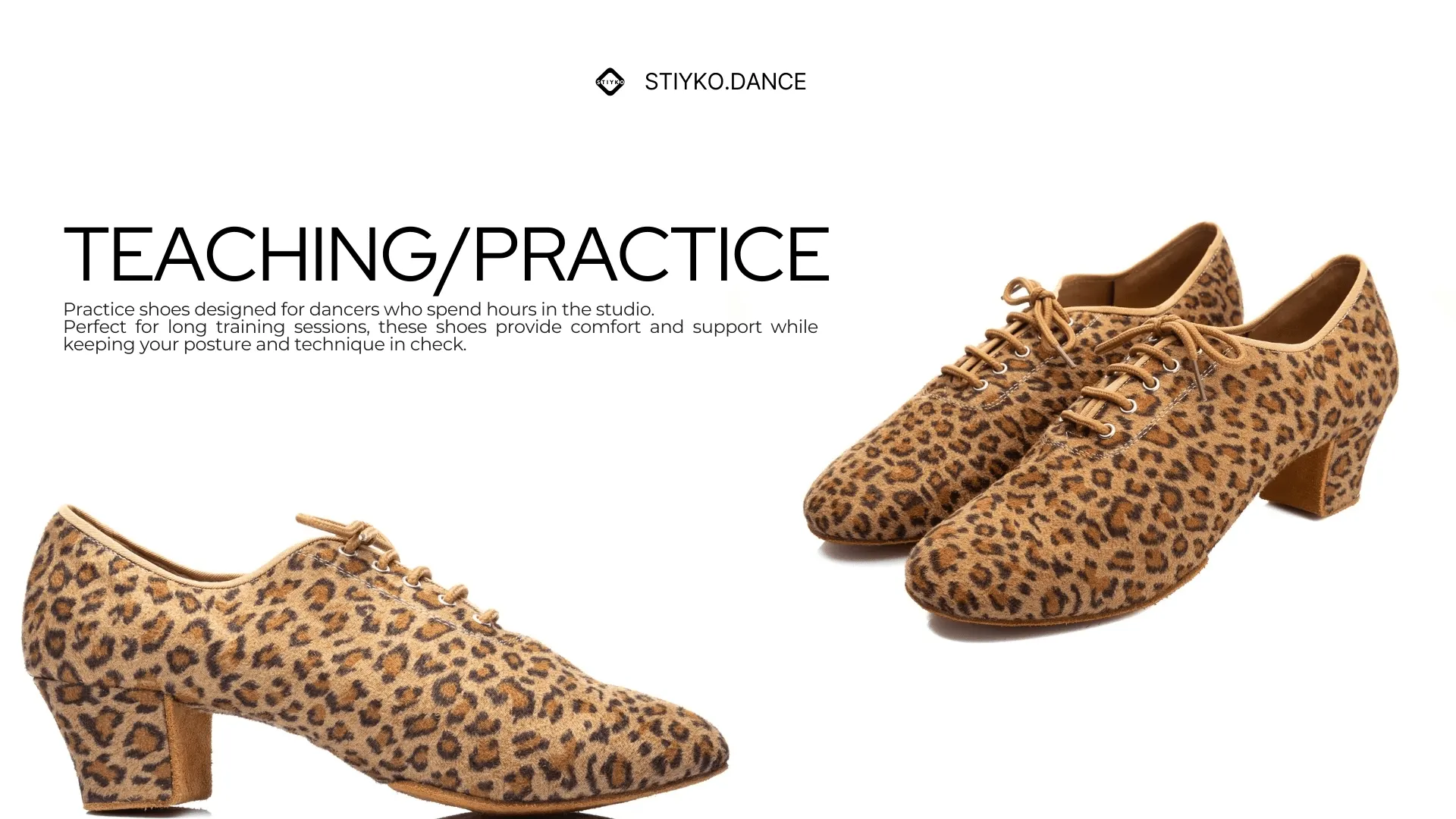
Training shoes are built for hours, not for minutes. A lower, wider heel, a cushioned insole and a flexible sole let you work through long repetitions without your feet paying for it the next day — while your competition pair stays clean and keeps its shape. Browse our practice and training dance shoes to see what that looks like in a real shoe.
What Are Practice Dance Shoes?
Practice dance shoes — also called training shoes — are ballroom shoes designed for rehearsal rather than performance. They share the things that make a dance shoe a dance shoe: a suede sole that grips and pivots on a wooden floor, a flexible construction that lets the foot point and roll, and a secure fit that holds the foot in place through turns.
What changes is the balance. A performance shoe is tuned for line, speed and appearance for two minutes at a time. A practice shoe is tuned for endurance: a lower heel, a broader heel base, more cushioning under the ball of the foot and, usually, a fuller closed upper that supports the foot instead of showing it off.
Practice Shoes vs Performance Shoes: The Real Differences
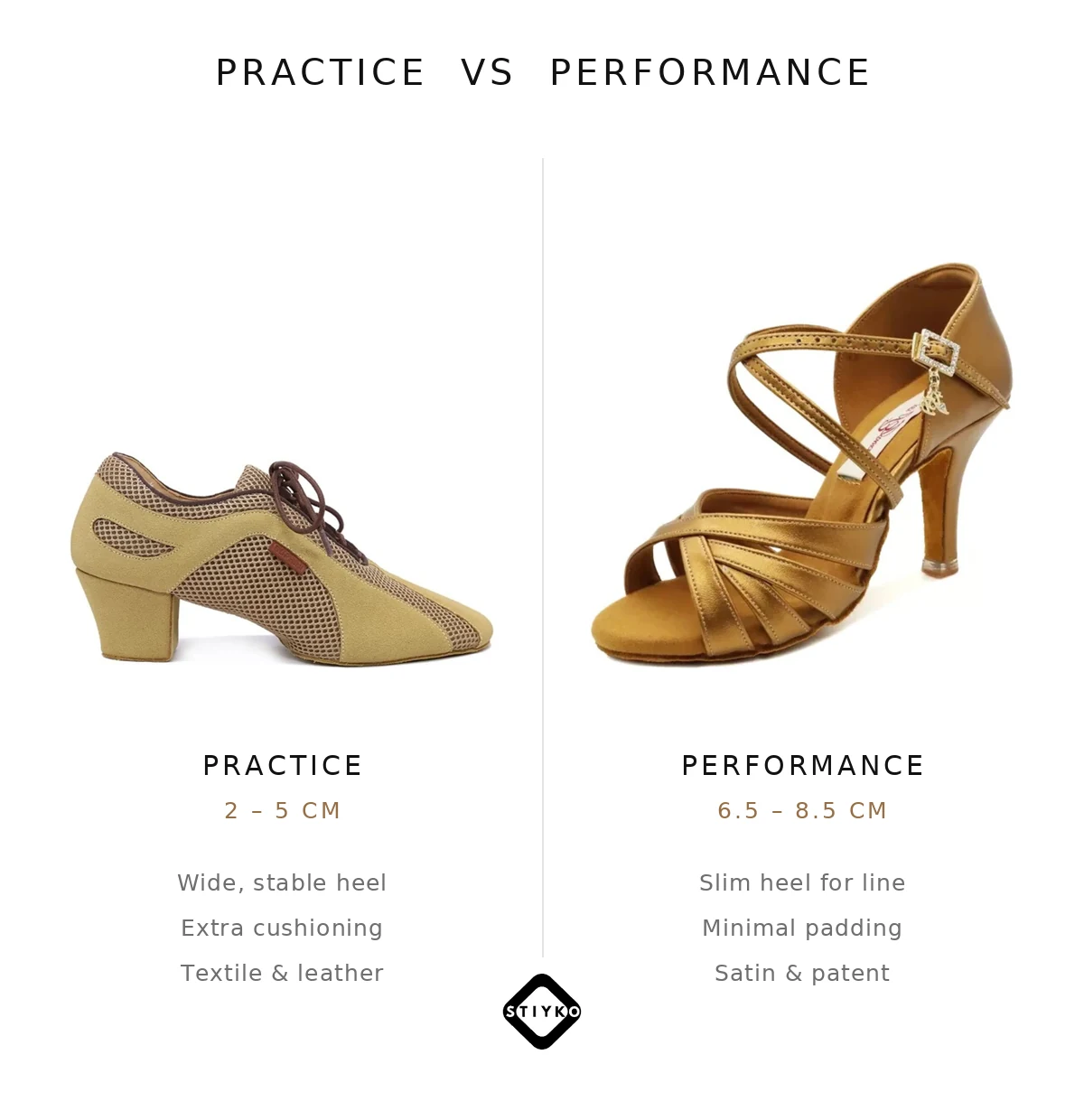
- Heel height. Practice models in our range run from 2 to 5 cm. Women's Latin performance shoes usually sit between 6.5 and 8.5 cm.
- Heel shape. Training heels are wider at the base — a block or low flare — so your weight is easier to control when you are tired.
- Upper. Practice shoes are more often closed and fuller-cut; performance shoes use thinner straps and open designs for line.
- Cushioning. Training models carry more padding under the forefoot, where hours of rehearsal do their damage.
- Materials. Our practice range is mostly textile and leather — durable and breathable — while satin and patent are more common on performance shoes.
- Purpose. One pair takes the mileage; the other stays presentable for the floor.
What to Wear to Your First Dance Class
You do not need competition shoes to start. For a first lesson, soft ballet shoes or any clean, flexible indoor shoe with a smooth sole is enough — what matters is that the sole does not stick to the floor and does not leave marks on it. Street sneakers are the wrong choice: rubber outsoles grab the floor, and a foot that cannot pivot is how ankles and knees get hurt.
Once you are going regularly — usually after a month or two — a proper pair of practice dance shoes is the single biggest upgrade you can make. A suede sole changes how you turn; a fitted heel changes how you balance. If you are not sure what size to order, our guide on how to measure your foot for the right dance shoe size walks through it with a ruler and a sheet of paper.
Heel Height for Training: Why 2 to 5 cm
Heel height is not a style decision in training — it is a workload decision. A 5 cm heel already shifts your weight forward onto the ball of the foot, which is where ballroom technique lives, without the ankle strain of a competition heel.
- 2–2.5 cm — beginners, teachers on their feet all day, dancers returning after injury.
- 3.5 cm — the everyday middle ground: forward weight, plenty of control.
- 4.5–5 cm — for dancers who compete in high heels and want training posture to match the real thing.
For women's Latin, a useful rule is to train one step lower than you compete: close enough that your balance transfers, low enough that three hours does not wreck you. Men's shoes work differently — see the section below. Our full heel height and shape guide covers slim, flare and contour heels in detail.
Materials and Soles
Most training shoes are textile or leather. Textile is light and breathes well through long sessions; leather moulds to the foot over time and holds its shape. Eco-leather and patent finishes are easier to wipe clean between classes.
The sole is the part beginners underestimate. A suede (chromed leather) sole is the standard for ballroom and Latin because it gives controlled slide — enough grip to push off, enough slide to spin. It is also the part that wears first: brush it with a wire shoe brush when it feels slick or clogged, and never wear dance shoes outdoors. Concrete destroys a suede sole in a single walk.
Men's Practice Dance Shoes
Men's training shoes are typically lace-up and closed, with a flexible suede sole — but the heel depends on your program, and the difference is bigger than most beginners expect.
- Latin (men's) — a Cuban heel of 3 to 5 cm. It shifts the weight forward onto the ball of the foot, which is what Latin hip and leg action is built on. Most of our men's Latin models sit at 4.5–5 cm.
- Standard / European program (men's) — a low 2–2.5 cm heel. Standard technique needs heel leads, long swing and rise-and-fall, so a flat, stable heel is the point, not a compromise.
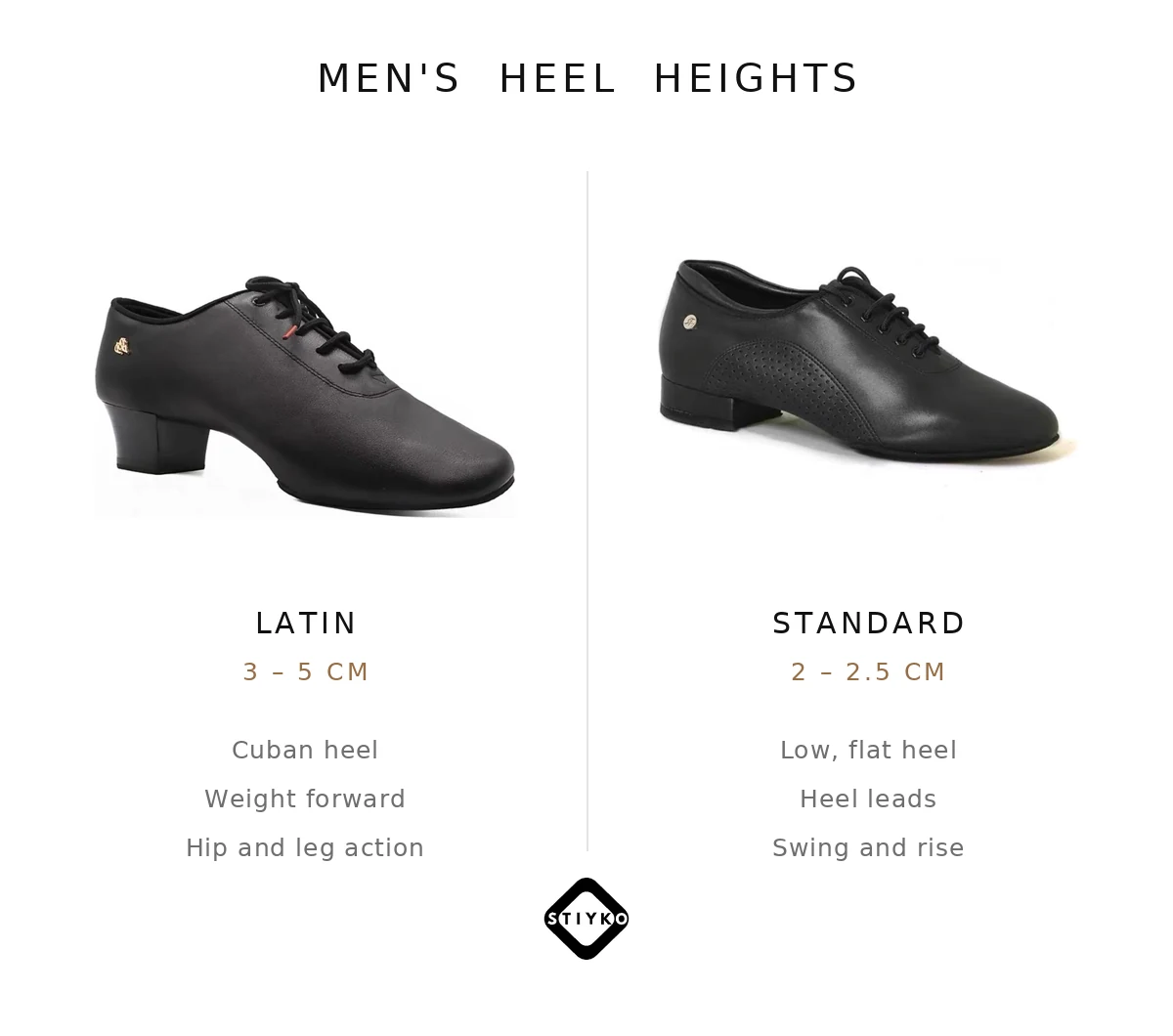
Train on the same heel height you compete on. Unlike women's shoes — where dropping a step down for rehearsal saves your feet — a men's Latin heel and a men's Standard heel produce genuinely different weight placement, so training in the wrong one teaches the wrong balance. That is why our men's practice models are mostly built on the 5 cm Latin heel rather than a token low one.
Men's Standard ballroom shoes look close enough to ordinary dress shoes to wear all evening at a social, but the sole and the flexibility are entirely different — never wear them outdoors.
Kids' Practice Dance Shoes
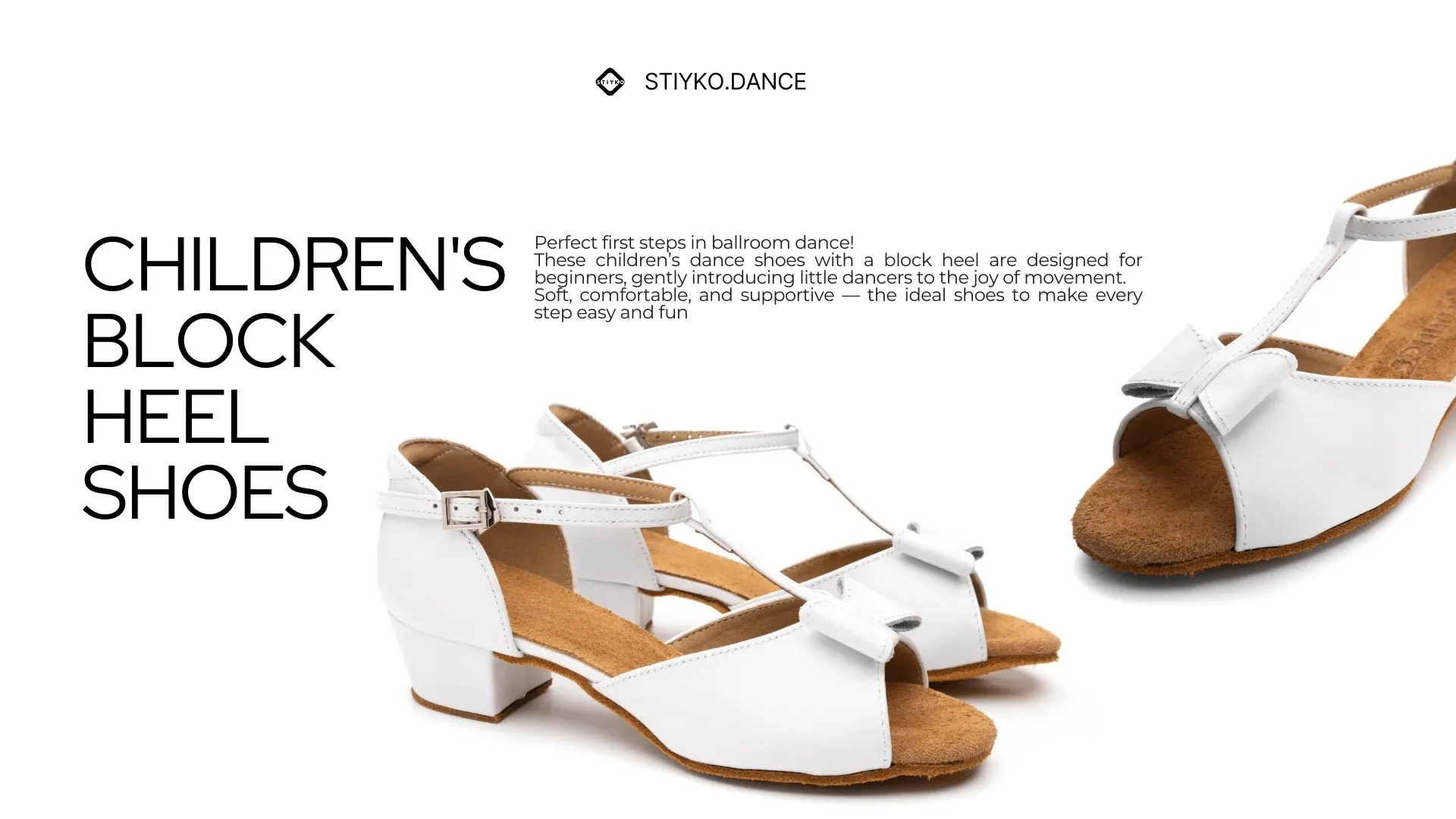
Children's feet change fast, and a growing dancer will go through several pairs before their first serious competition. That makes a dedicated practice pair the sensible economy: keep the competition shoes clean and unstretched, and let the training pair take the wear. Look for a secure strap, a light flexible sole and a low heel. Our children's dance shoes are built for exactly that stage.
Do You Really Need Two Pairs?
If you train more than twice a week, or if you compete, yes. A competition shoe worn through daily rehearsal stretches, creases and loses its heel finish within a season — and a stretched shoe is a genuine safety problem, not just a cosmetic one. Our dance shoe safety checklist shows what worn-out looks like before it lets you down mid-routine.
If you dance once a week socially, one good pair is enough — just keep it indoors and brush the sole.
How to Choose Practice Dance Shoes Online
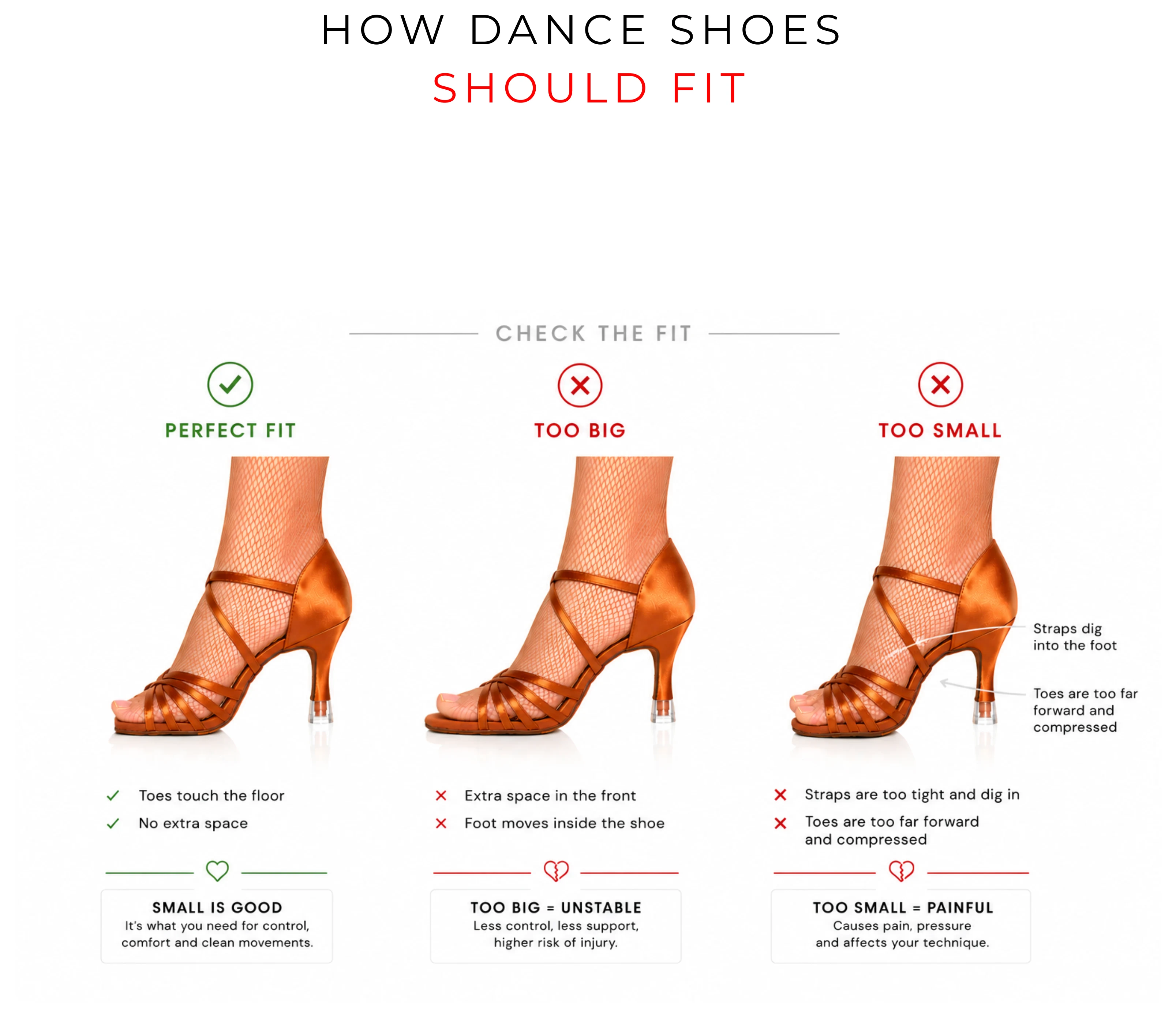
Order the way you would order any dance shoe: measure both feet in the evening, when they are at their largest, and go by centimetres rather than by your street size. A practice shoe should sit snugly, with the toes reaching the edge of the insole and no sliding at the heel — the same fit rule as a performance shoe.
We keep practice models from LDAE London England, Nice Today, Suphini, Just BD dance, KC dance, Tango Regina, NB dance and Adsdance, in heels from 2 to 5 cm. Send us your foot measurements and how often you train, and we will tell you which models actually suit you.
Frequently Asked Questions
Can I compete in practice shoes?
At a training competition or a first-level start, nobody will stop you. At higher levels the lower heel changes your line and your balance, and most dancers switch to a performance pair. Train in practice shoes, compete in Latin or Standard competition shoes.
What heel height should a beginner train in?
Start at 2–3.5 cm. It builds the forward weight placement ballroom needs without overloading ankles that are not conditioned yet, and you can move up later.
Can I wear sneakers to a ballroom class?
No. Rubber soles grip the floor and stop the foot from pivoting, which is how ankle and knee injuries happen. If you have not bought dance shoes yet, soft ballet shoes or any smooth-soled indoor shoe is safer.
How long do practice dance shoes last?
With regular training, roughly a season or two depending on the floor and the hours. The sole and the heel tip go first — check them monthly.
Do children need separate practice shoes?
If they train more than twice a week, yes. It protects the competition pair and it is cheaper over a season of growing feet.
Can I wear practice dance shoes outside?
Never. A suede sole is destroyed by pavement, and grit carried in on the sole damages the studio floor too.