Contents
Your ballroom dance shoes are one of the most important pieces of equipment on the dance floor. Even the highest-quality Latin dance shoes or ballroom heels gradually lose their original shape, stability, and support over time.
Many dancers continue wearing shoes long after they should be replaced, increasing the risk of slipping, ankle injuries, poor balance, and loss of control during dancing.
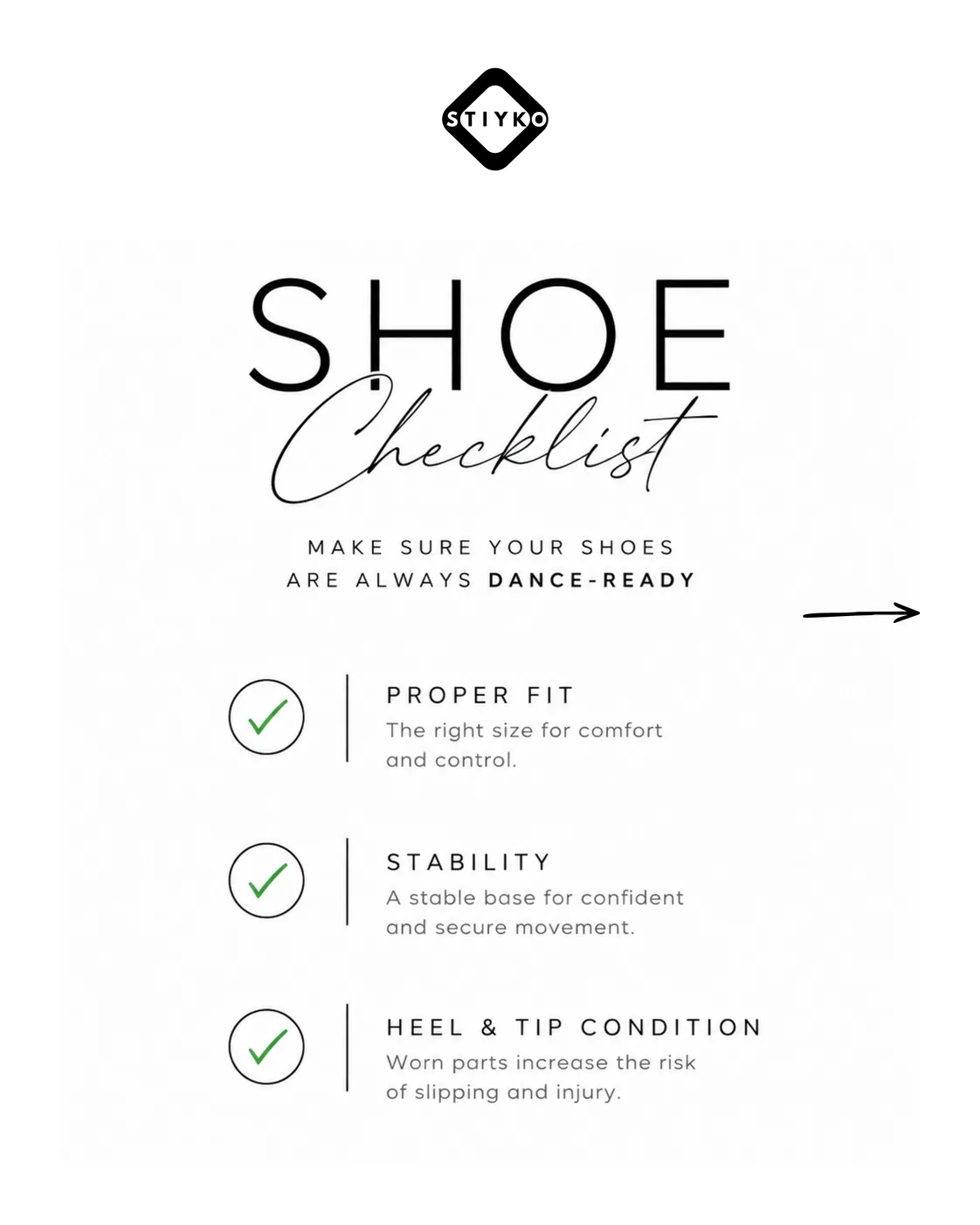
This simple checklist will help you quickly assess the condition of your dance shoes and determine whether they're ready for your next training session or competition.
1. Check the Shoe Fit
Proper fit is the foundation of safe dancing.
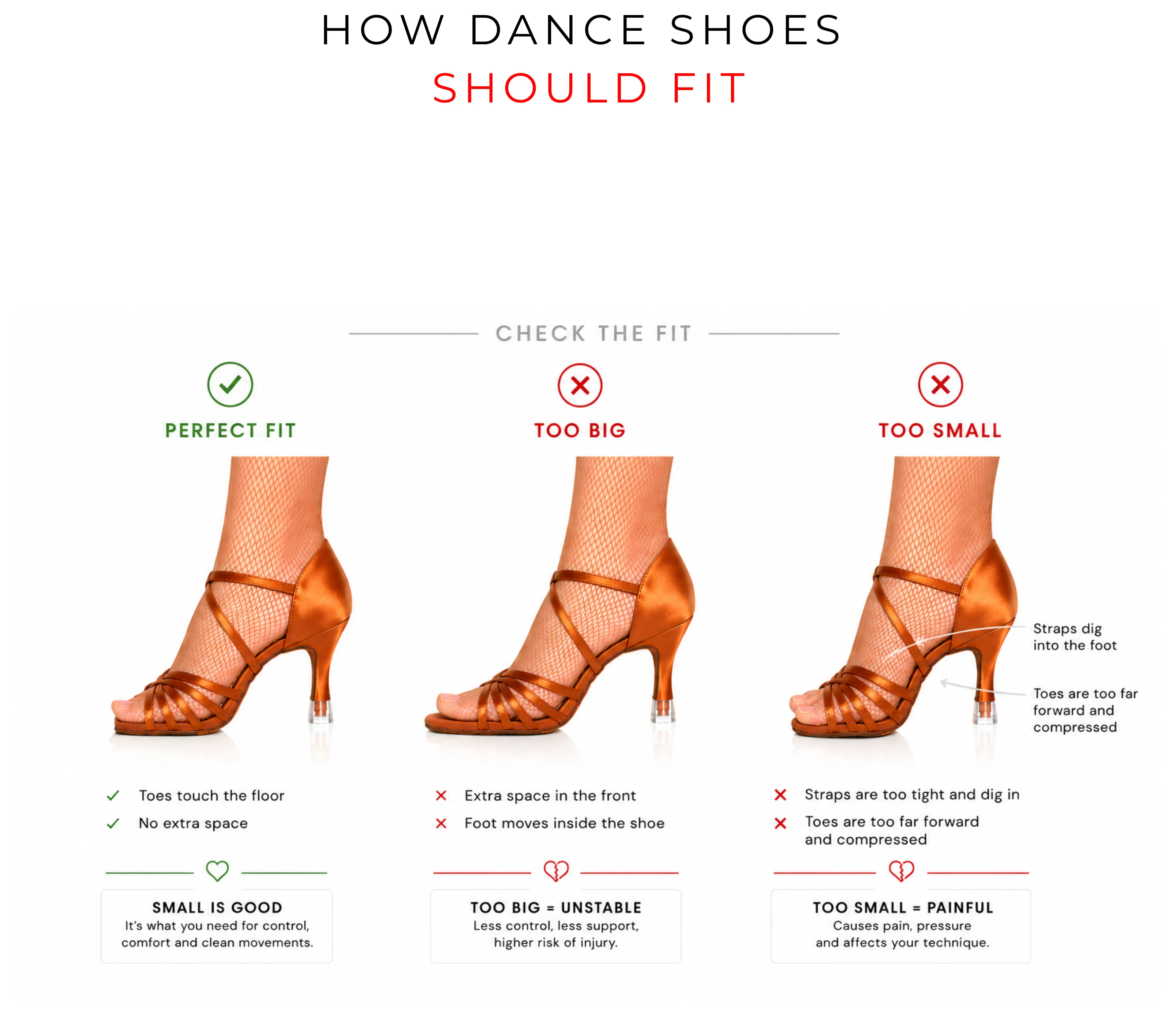
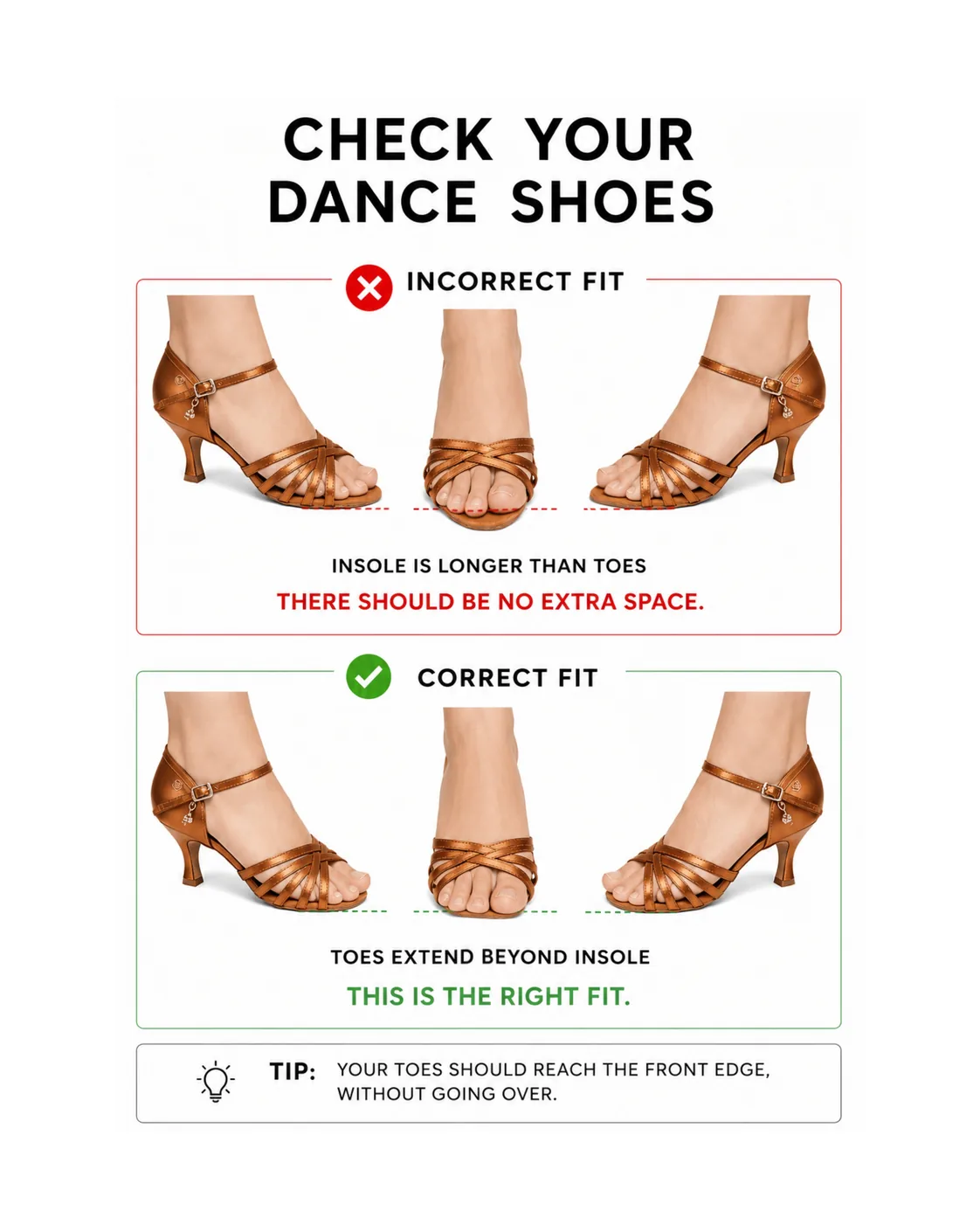
Ballroom dance shoes should fit like a second skin. Your foot should feel secure without excessive pressure, while your toes should naturally reach the front edge of the insole without much extra room.
If there is extra space inside the shoe, your foot will move during dancing. This reduces precision, makes turns less stable, and increases the chance of twisting your ankle.
Signs your dance shoes are the wrong size:
- Extra space behind the heel
- Heel lifting inside the shoe
- Foot sliding forward or backward
- Side-to-side movement inside the shoe
- Toes not reaching the front edge of the insole
- Reduced control during spins
A properly fitted pair of Latin dance shoes provides maximum control, comfort, and confidence.
2. Check Heel Stability
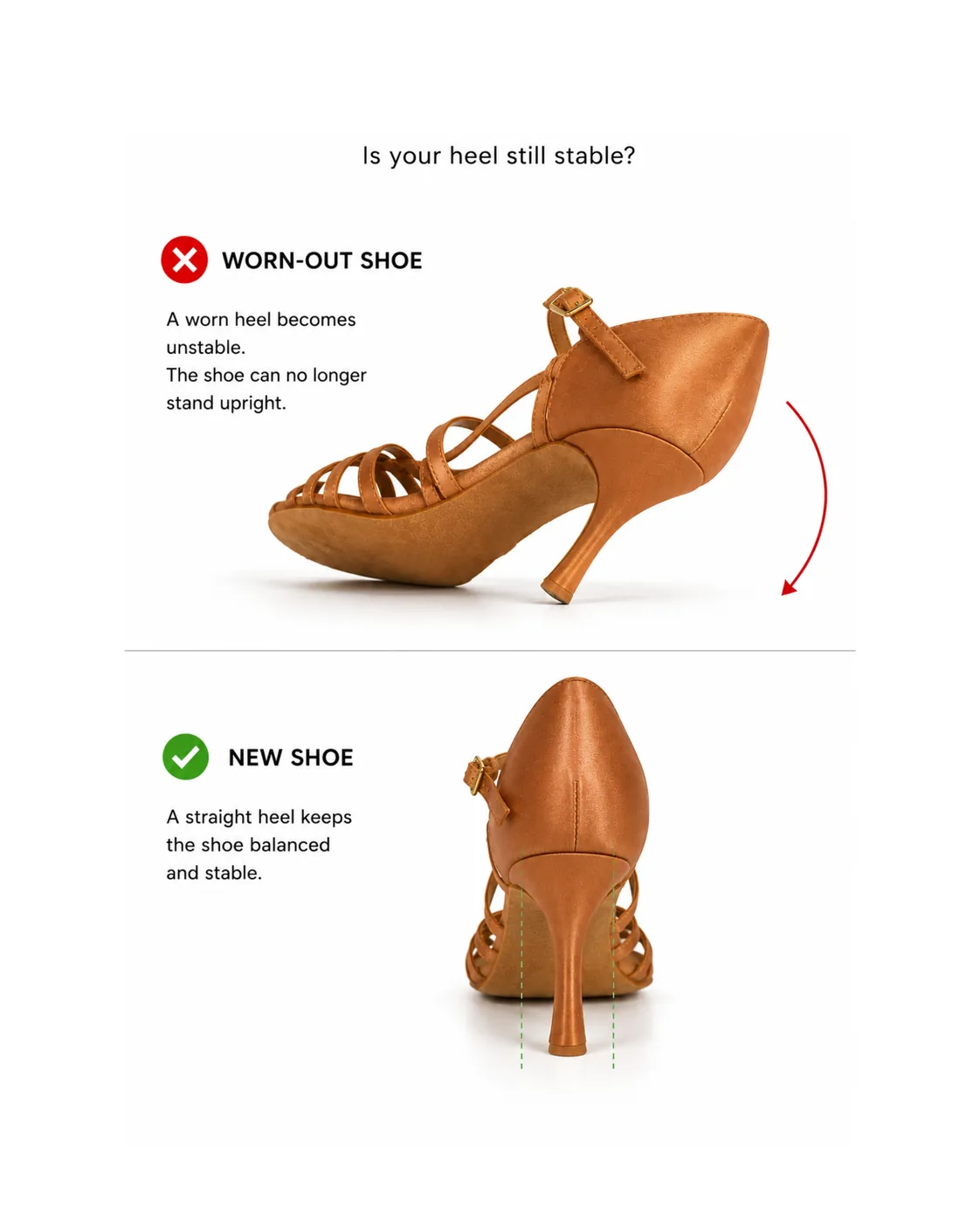
One of the easiest ways to evaluate your ballroom shoes is by placing them on a flat floor.
A new dance shoe stands perfectly upright.
As the heel wears unevenly, the shoe gradually becomes unstable and may lean or even fall to one side. This indicates that the heel has become misaligned from months of dancing, and the center of load has shifted.
An unstable heel affects:
- Balance
- Weight transfer
- Turning technique
- Foot alignment and fatigue
- Overall stability and injury risk
If your shoe no longer stands straight, it's time to inspect the heel condition or consider replacing the shoes.
3. Inspect Heel Protectors
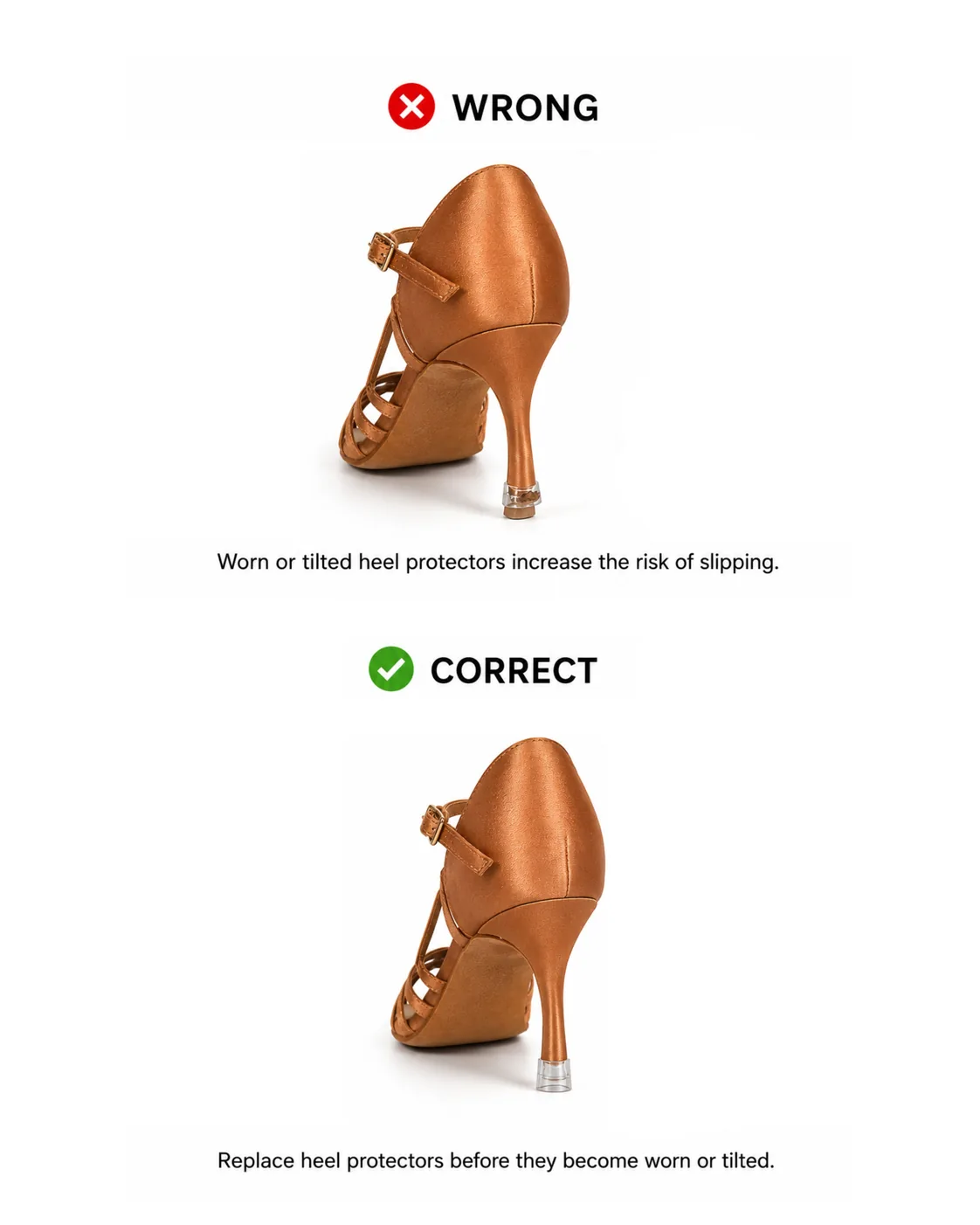
Heel protectors are a small but extremely important detail of dance footwear. They preserve the heel while improving grip and protecting dance floors, and help the heel keep its correct geometry.
However, even the best heel protectors wear down over time — and a worn one can become just as dangerous as having no heel protector at all.
Replace your heel protectors if they become:
- Tilted
- Unevenly worn
- Deformed
- Cracked
- Excessively worn or thin
A worn heel protector changes the angle of the heel, which throws off how weight is distributed through the foot — balance suffers, slipping increases, and the heel itself wears out faster.
A fresh heel protector keeps the heel centered, maintains proper balance, and extends the life of your ballroom dance shoes.
4. Inspect the Heel Tip
The heel tip (also called the top lift) is the small contact point between your shoe and the floor — it takes on the most load during dancing.
Over time, heel tips wear down unevenly, changing the angle of the heel.
A worn heel tip can cause:
- Slipping
- Poor stability
- Uneven weight distribution
- Faster heel damage
- Foot and knee pain
Regularly replacing worn heel tips is one of the simplest ways to keep your dance shoes performing like new.
5. Look for Shoe Stretching
Even quality dance shoes naturally stretch after months of use.
As the satin, leather, or other materials loosen, your foot becomes less secure inside the shoe than it was when it was new.
Signs of an over-stretched dance shoe:
- Heel lifting, with a noticeable gap forming near the heel
- Foot movement inside the shoe
- Foot sliding forward
- Toes losing their correct position
- Reduced control over balance
- Increased risk of ankle injuries
If your shoes feel noticeably looser than when they were new, they may no longer provide the support required for safe dancing — especially during fast turns, spins, and complex technical elements.
When Should Ballroom Dance Shoes Be Replaced?
Consider replacing your ballroom shoes if you notice:
- The shoe no longer stands upright
- The heel feels unstable
- Heel protectors are worn or tilted
- Heel tips are uneven
- The shoes have stretched significantly
- Your foot moves inside the shoe
- Balance feels less secure than before
Even premium ballroom dance shoes have a limited lifespan. Regular inspection — and timely replacement of individual parts or the shoes themselves — helps maintain proper technique, avoid injury, and get the most enjoyment out of dancing.
How to Extend the Life of Your Ballroom Dance Shoes
Regular care for your ballroom dance shoes helps them keep their shape and function for much longer. We recommend:
- Regularly check the condition of your heel protectors
- Replace heel tips on time
- Clean the suede sole with a special brush
- Store your shoes in a dry place
- Don't wear your dance shoes for walking outside
- Keep an eye on how much the shoes have stretched
- Inspect the heels after every intensive training session or competition
This kind of care not only keeps your shoes looking their best, but also helps you avoid costly repairs.
Keep Your Ballroom Dance Shoes Performance-Ready
Whether you're practicing every day or competing internationally, maintaining your ballroom dance shoes is essential for comfort, precision, and safety.
Checking the fit, heel stability, heel protectors, heel tips, and overall condition only takes a few minutes — but can greatly improve your confidence on the dance floor.
Properly maintained dance shoes provide better balance, smoother movement, greater control, and longer shoe life.
If you want to dance at your best, make inspecting your ballroom shoes — Latin, Standard, or otherwise — part of your regular training routine.