Contents
"Latin or Standard?" is one of the first questions every new ballroom dancer has to answer, and the two shoes are easy to mix up in a photo. Put them side by side, though, and they are built for almost opposite jobs: one opens the foot up for hip action and pivots, the other locks it down for a smooth, controlled glide.
If you have not settled on a programme yet, the complete guide to choosing ballroom dance shoes covers all four shoe types first. This guide compares Latin and Standard dance shoes feature by feature — heel, upper, sole and technique — so you know exactly which one your class or your next competition calls for. Browse the Latin collection or the Standard collection directly if you already know your discipline.
What Are Latin Dance Shoes?
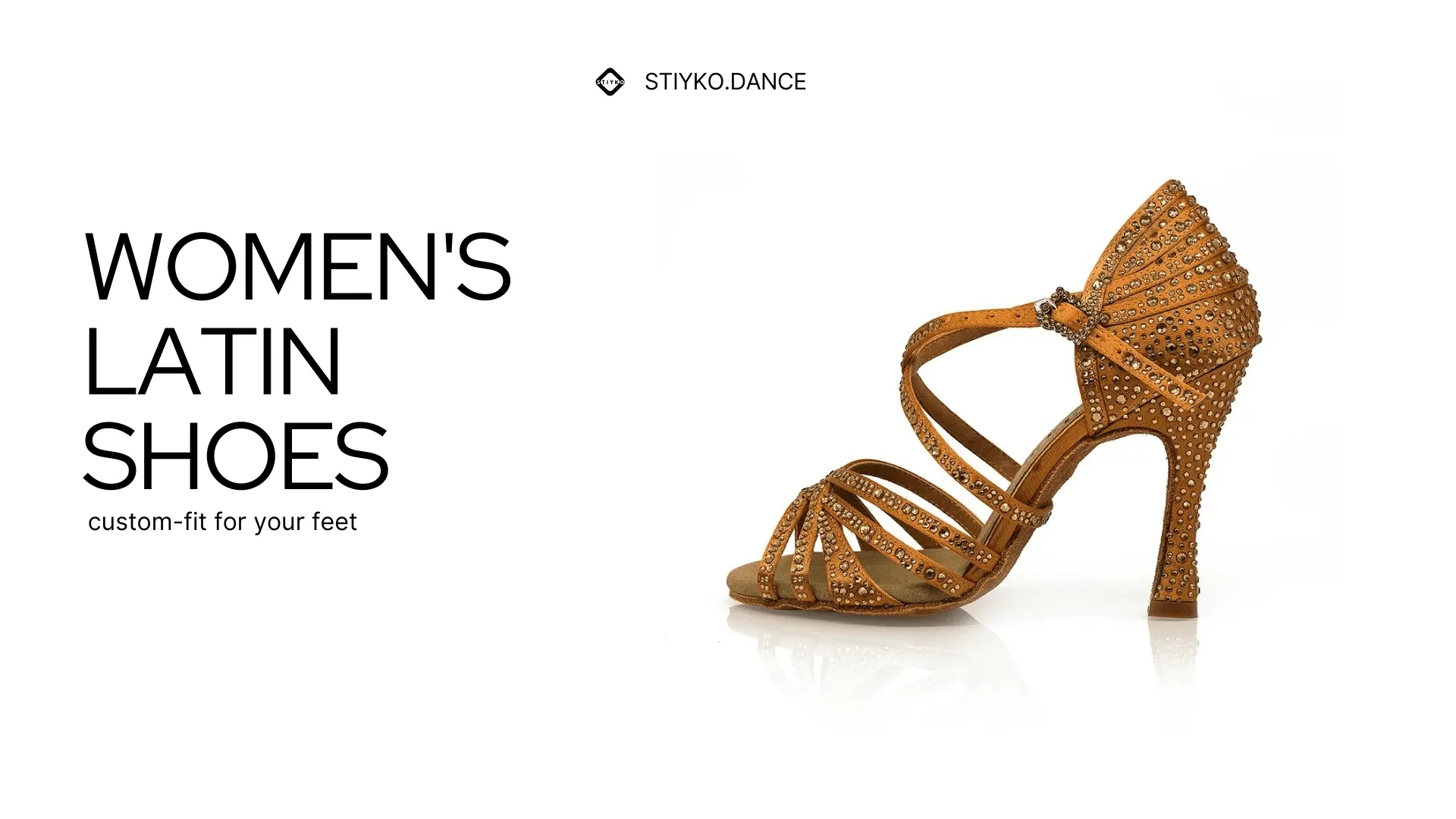
Latin shoes are built for Cha-Cha, Samba, Rumba, Jive and Paso Doble — dances built around hip action, fast footwork and pivots. The open, strappy sandal shows the line of the foot and ankle, a slim flared heel keeps the weight forward for that hip movement, and a fully split suede sole lets the foot roll and point through every step.
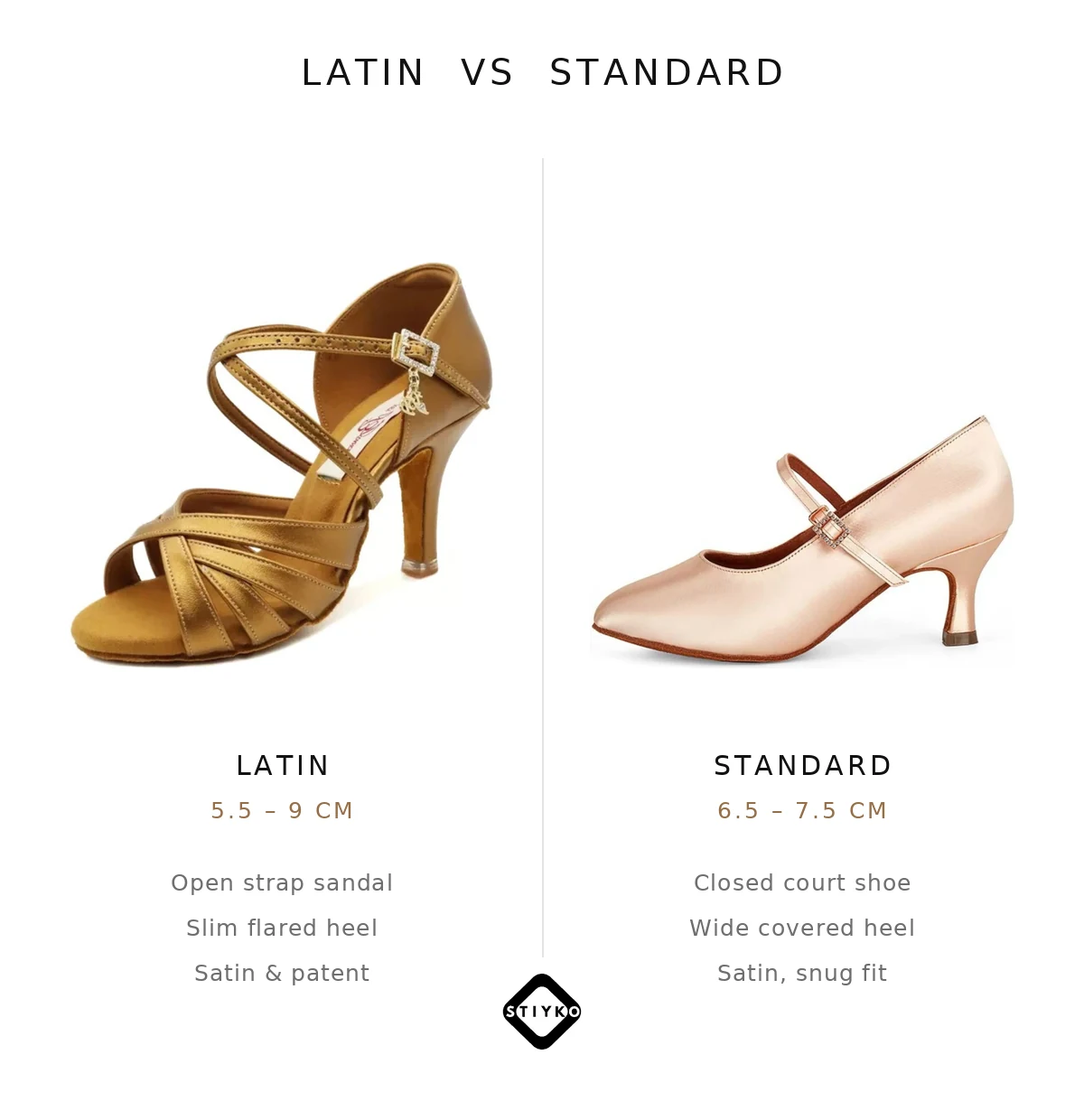
In our range, women's Latin heels run from 5.5 to 9 cm, most commonly 7–8.5 cm once a dancer is past the beginner stage. Men's Latin shoes use a lower 3–5 cm Cuban heel — enough to shift the weight forward without sacrificing stability. See the full range of Latin dance shoes.
What Are Standard (Ballroom) Shoes?
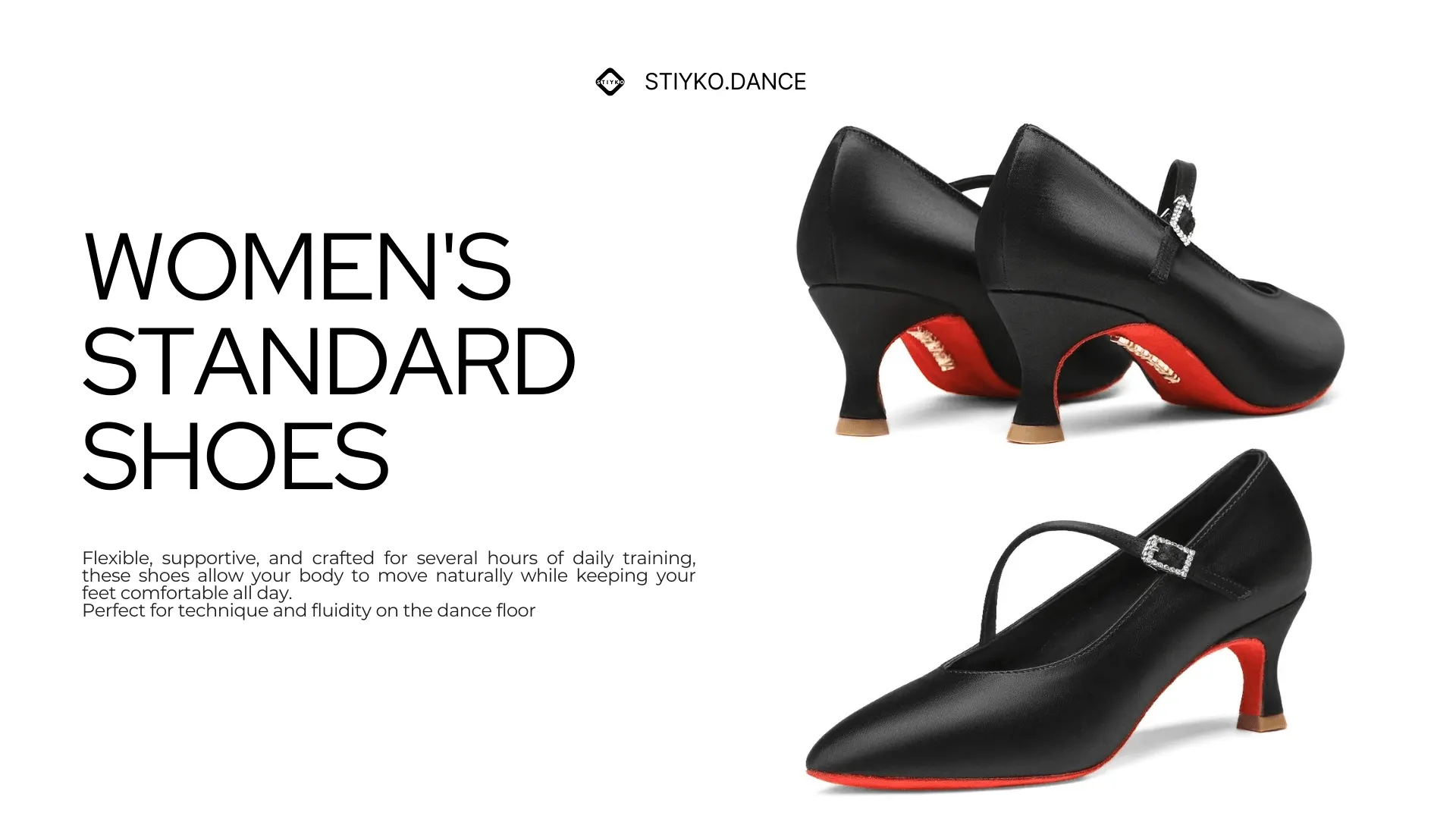
Standard shoes are built for Waltz, Tango, Viennese Waltz, Foxtrot and Quickstep — dances built around hold, sway and travelling smoothly across the floor with a partner. A closed court-shoe upper supports the whole foot through long glides and turns, and a wider, covered heel gives a stable base under a body that is constantly leaning and swaying.
Here is the part that surprises most beginners: for women, Standard heels are not dramatically lower than Latin ones. Our Standard range runs 6.5–7.5 cm — inside the Latin range, not below it. What actually separates the two is the heel's shape and the closed upper, not its height. Men's Standard shoes are the exception: a flat, low 2–2.5 cm heel that keeps a heel-led walk stable through every step. See the full range of Standard dance shoes.
Heel Shape: The Real Difference, Not Just Height
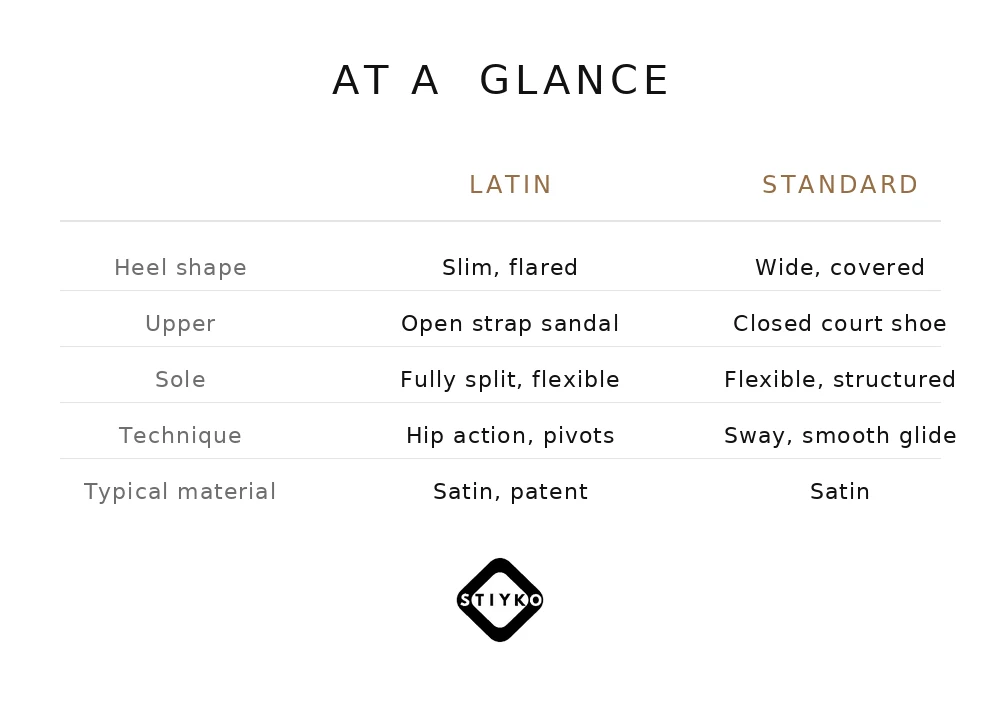
A Latin heel is slim and flared outward toward the base — sometimes called a flare or stiletto style — so the foot can pivot on a small point of contact with the floor. A Standard heel is wider and usually covered in the same satin as the upper, built to plant flat and stay put under a body in continuous motion. Pick one up in each hand and the difference is obvious even before you look at the rest of the shoe.
Upper and Sole: Open vs Closed, Split vs Structured
- Latin upper: thin crossing straps and an open toe and heel, so the foot's line is visible to the judges and the ankle stays free to flex.
- Standard upper: a closed, court-shoe cut that wraps and supports the whole foot through long smooth steps.
- Latin sole: fully split suede, flexible enough for the foot to point and roll through a pivot.
- Standard sole: suede as well, but built with more structure underfoot for stability during hold and sway.
Why the Technique Dictates the Shoe
Latin technique moves through the hips, with fast direction changes and pivots on the ball of the foot — the shoe has to disappear and let the foot do that work unassisted. Standard technique moves through the body as a whole, with a continuous sway and rise-and-fall carried across the floor in closed hold — the shoe has to anchor the foot so the whole frame stays connected to your partner. Wear the wrong pair to the wrong class and you will feel it within a few bars: a Standard shoe fighting a pivot, or a Latin shoe with no support under a long glide.
Can You Use One Pair for Both?
For an absolute beginner's first few classes, a low-heeled practice shoe works for both — that is exactly what practice shoes are for. But once you are dancing Latin and Standard as separate disciplines, a shared pair compromises both: a Latin heel is too unstable for a smooth Standard glide, and a Standard heel is too rigid for a Latin pivot. Most dancers who compete in both own one pair of each.
Which Should You Buy First?
Buy for the class on your schedule, not the style you like the look of. If your studio's syllabus starts with Cha-Cha or Rumba, get a Latin pair; if it opens with Waltz, get a Standard pair. Not sure yet, or taking a mixed beginner class? Start in a practice shoe with a low, stable heel and add your first discipline-specific pair once you know which program you are training in.
Frequently Asked Questions
Is a Standard heel really not lower than a Latin heel?
For women, correct — our Standard range runs 6.5–7.5 cm, well inside the 5.5–9 cm Latin range. The heel's shape and the closed upper, not its height, are what separate the two. Men's shoes are the exception: Standard sits at a flat 2–2.5 cm against Latin's 3–5 cm Cuban heel.
Can I compete in Standard events wearing Latin shoes?
Not comfortably. The open, unstable heel that helps a Latin pivot works against you in a smooth glide, and judges will notice a foot that isn't properly supported. Wear Standard shoes to Standard events.
Do kids need separate Latin and Standard shoes?
Not at the beginner stage — a low-heeled kids' dance shoe covers both disciplines until a child specializes. See our kids' ballroom shoe guide for when to make the switch.
Which material is more common — satin or leather?
Satin dominates both categories in our range, with patent leather also common on Latin uppers for extra shine under stage lighting. See our dance shoe care guide for how to look after satin specifically.