Contents
- How to Measure Foot Length
- How to Measure Foot Width
- How Should Dance Shoes Fit?
- Signs Your Dance Shoes Are Too Big
- Signs Your Dance Shoes Are Too Small
- How to Choose the Right Dance Shoe Size
- Choosing Women's, Men's and Children's Dance Shoes
- Latin Shoes vs Standard/Ballroom Shoes
- Should Your Toes Extend Past the Shoe?
- How to Choose the Right Heel
- The Most Common Dance Shoe Sizing Mistakes
- How to Check That Dance Shoes Fit You
- What to Send Us When Buying Dance Shoes Online
Properly fitted dance shoes are one of the most important factors in comfortable, safe training, performances and competitions. How well a shoe matches the shape and length of your foot directly affects stability, balance, control and comfort on the floor.
This matters most when choosing ballroom dance shoes, Latin dance shoes, practice shoes, or children's dance shoes.
A sizing mistake does not always show up right away. A shoe can feel comfortable while trying it on, but once you point your foot, rise onto the balls of your feet or perform dance movements, the foot may start to slide, the toes may extend too far, or there may be too much empty space inside. That is why choosing dance shoes should be based on the actual fit on your foot — not just a size number.
How to Measure Foot Length
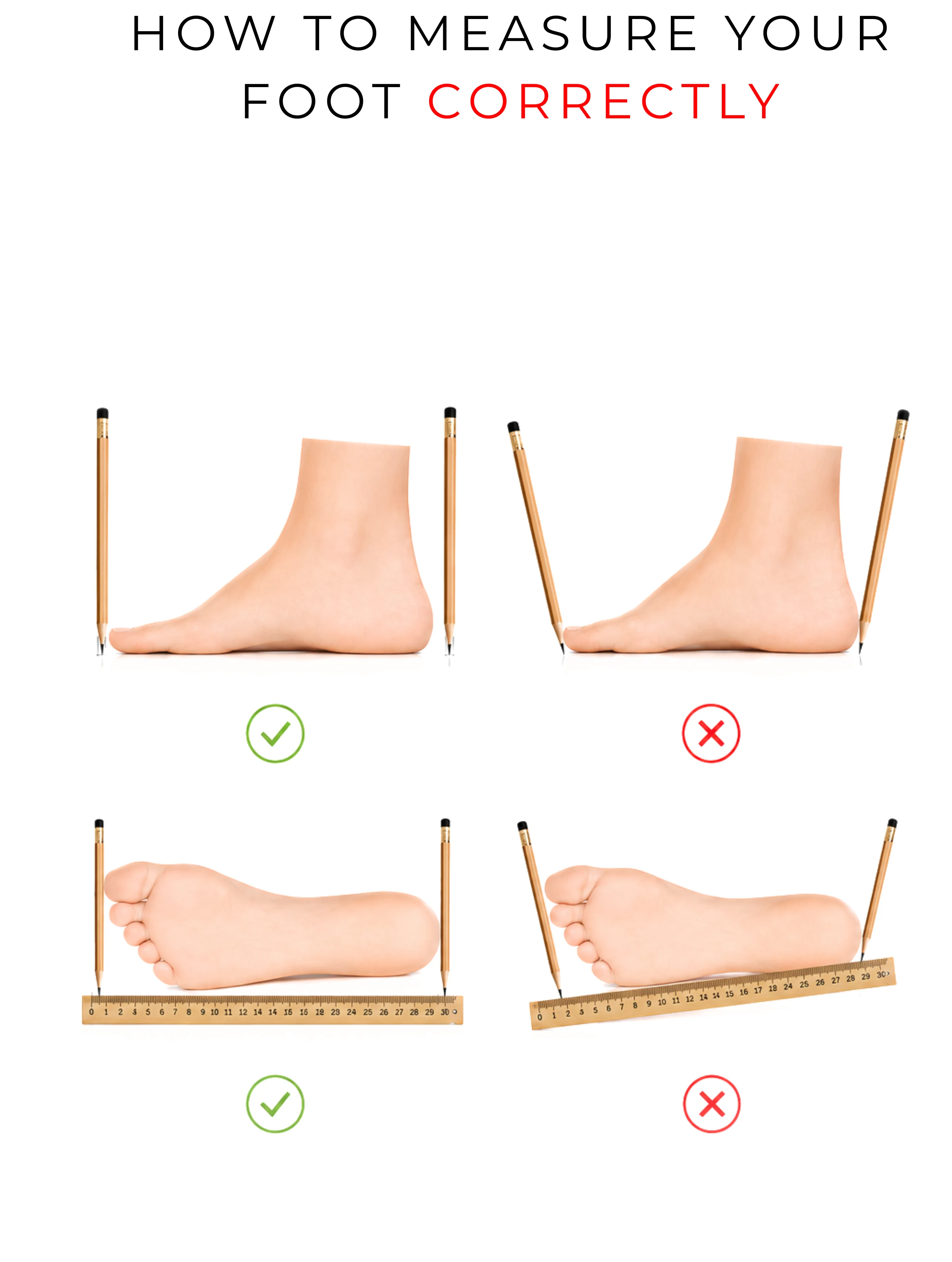
Before ordering women's, men's or children's dance shoes, measure your feet correctly first. You will need a sheet of paper, a pencil, a ruler and a flat, hard surface. It's best to measure in the second half of the day, once your feet have had their usual amount of load on them.
Stand with your foot on the sheet of paper. Your heel should sit firmly against a straight edge, with the foot standing evenly. Whatever you use to mark the boundaries of the foot — a pencil or another straight object — should touch it without unnecessary gaps. Measure the distance from the back of the heel to the longest toe, without leaving artificial extra room between the heel, the toes and the measuring lines: even a few millimetres can affect which size you choose.
Measure both feet, since their length can differ slightly, and use the measurement of the larger foot when choosing your size.
How to Measure Foot Width
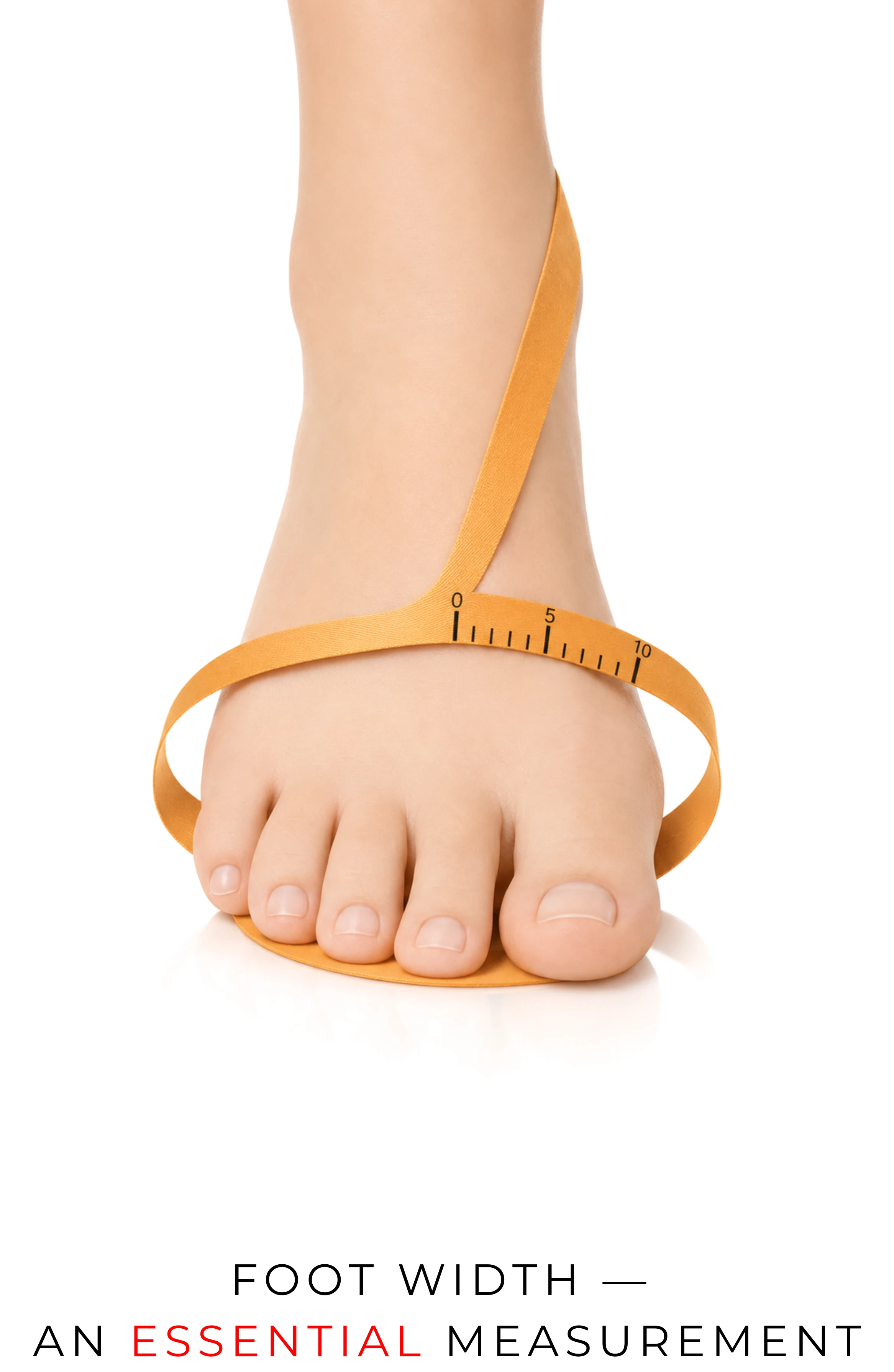
Foot length is not the only measurement that matters. Foot width, or fullness, is especially important when choosing professional dance shoes — it shows how wide and voluminous your foot is across the forefoot. Measure around the widest part of the foot, roughly at the ball of the foot, using a soft measuring tape. Don't pull it too tight: it should sit snugly against the foot without squeezing it.
Two people can have exactly the same foot length — say, 24 cm — but a completely different shape: one foot can be narrow, another wide or full. That's why the same dance shoe size will not necessarily fit different feet equally well, which is why the width measurement is essential.
How Should Dance Shoes Fit?
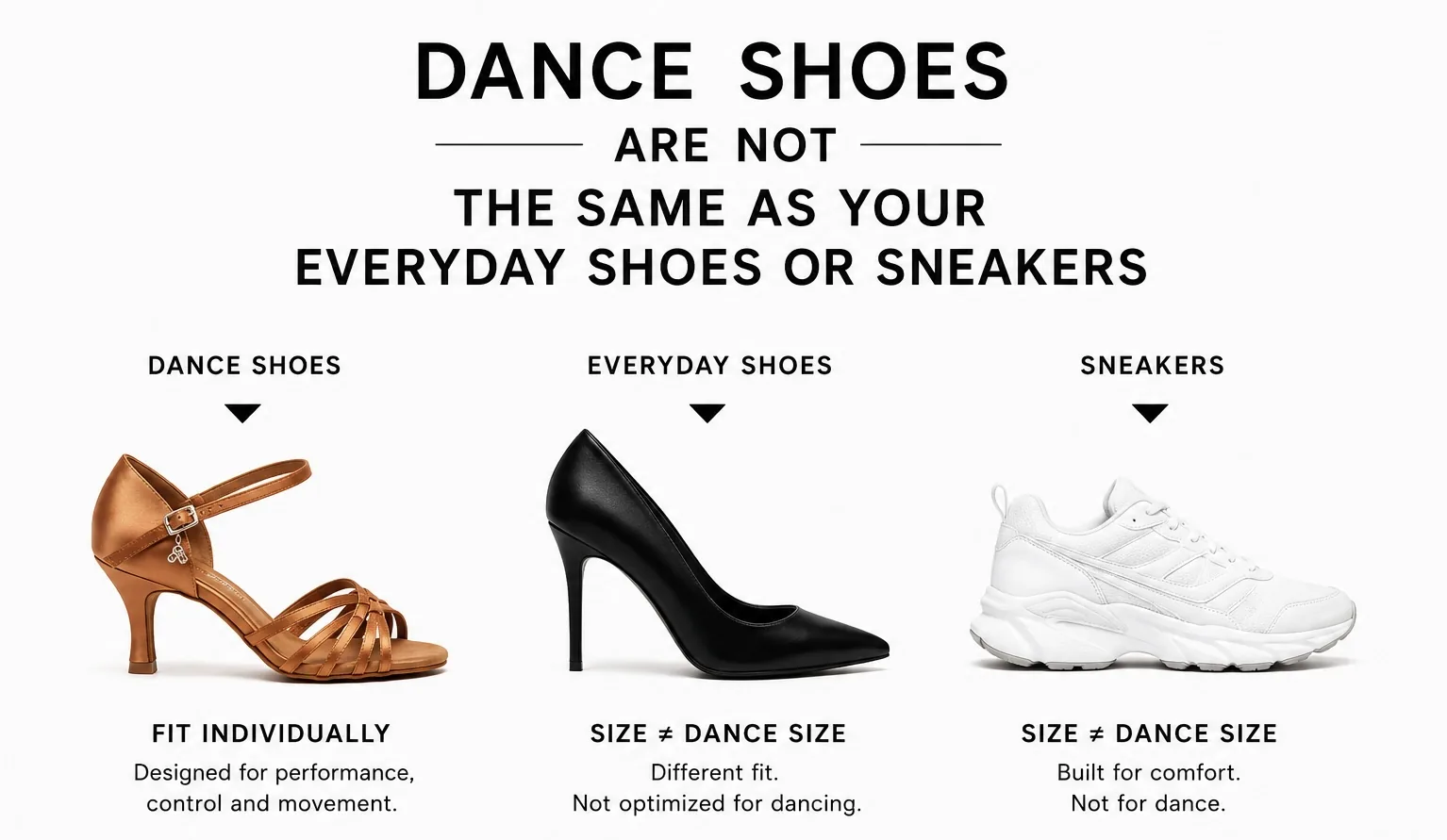
The correct fit of a dance shoe is different from everyday footwear. In regular sneakers or shoes, people often leave some extra room at the front — for dancing, that approach usually doesn't work. A dance shoe needs to work together with your foot: when you point your foot or perform dance movements, extra space lets the foot shift inside the shoe, which reduces control and stability.
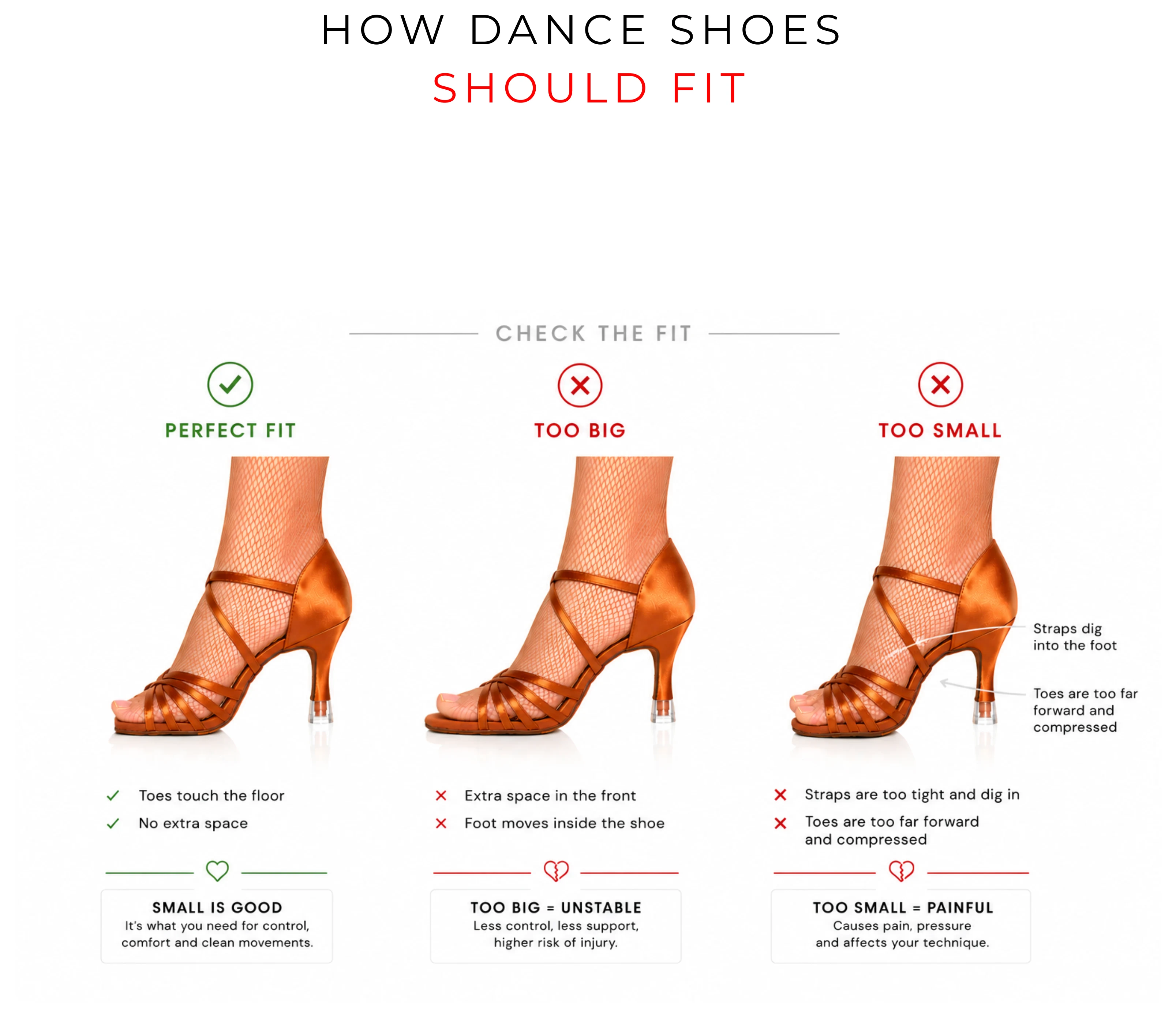
Signs of a correctly chosen size: the foot is well fixed, there's no excess room inside, the heel doesn't shift, the foot doesn't slide forward, the straps don't dig in, the toes aren't unnaturally squeezed, and while pointing the foot the toes interact correctly with the floor so the shoe lets you control your foot's movement.
Signs Your Dance Shoes Are Too Big
One of the most common mistakes is choosing a shoe "with room to spare". At first it can feel comfortable, but during dancing the foot starts moving inside the shoe. If the insole is too long, pointing the foot can leave a noticeable empty edge at the front.
- the foot slides forward
- loss of stability and control
- incorrect toe position during movement
- less precise execution of dance movements
- a feeling that the shoe "lives separately" from the foot
This is especially important for Latin dance shoes, since Latin dances put a heavy emphasis on foot articulation, weight transfer and precision of movement.
Signs Your Dance Shoes Are Too Small
The opposite mistake is taking too small a size for the sake of a maximally tight fit — this is also wrong. If a shoe is too short, the foot is forced to compress excessively at the front. Toes can bend sharply, get squeezed, be pushed out of a correct position, feel under heavy pressure and lose their natural mobility. With the wrong length, it can even feel as if the foot is curling up inside the shoe.
How to Choose the Right Dance Shoe Size
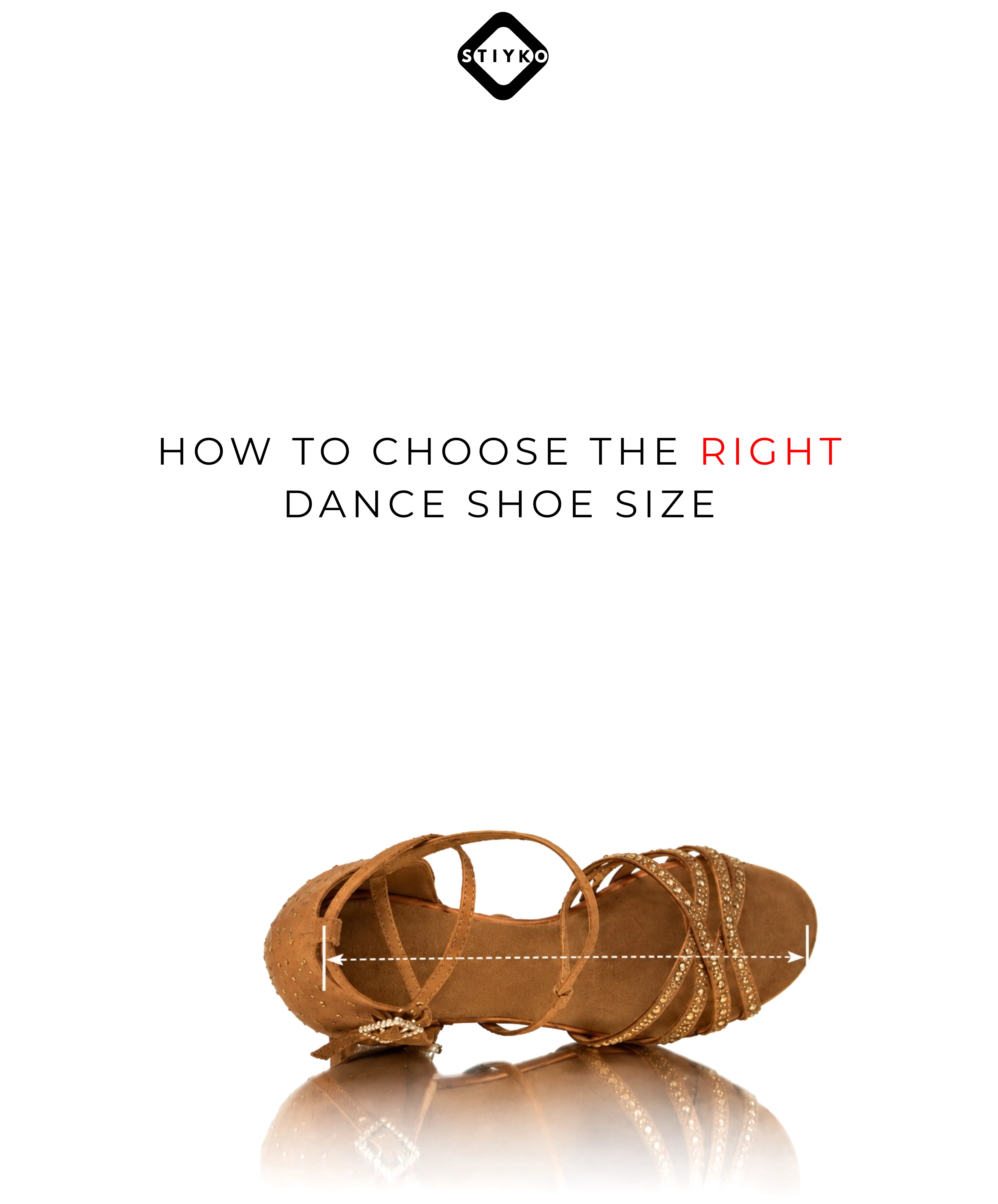
Don't buy dance shoes based only on the number you wear in everyday footwear. If you take one size in regular shoes, that's no guarantee the same size will fit a specific ballroom shoe model — different manufacturers use different size grids, lasts, materials and constructions.
Instead, base your choice on foot length + foot width + foot shape + the specific shoe model + what the shoe is for.
Choosing Women's, Men's and Children's Dance Shoes
Women's dance shoes need to fix the foot correctly and allow movement without sliding — beyond length, take into account width, toe shape, instep, forefoot width, heel type and height, last shape, and the number and placement of straps. For Latin, foot articulation and flexibility of the shoe matter most.
Men's dance shoes also shouldn't be chosen by length alone — width, fullness, last shape, heel height and type, material and sole stiffness all matter, along with whether the shoe is meant for Latin or standard. A good fit holds the foot securely without creating excessive pressure.
For children's dance shoes, parents often make the same mistake: buying a size "to grow into". That extra room may be fine in everyday shoes, but for ballroom it can interfere with foot control and balance. Children's dance shoes shouldn't slide inside, shouldn't excessively compress the toes, and should be re-checked regularly, since a child's foot keeps growing.
Latin Shoes vs Standard/Ballroom Shoes
Latin dance shoes are made for Cha-Cha-Cha, Samba, Rumba, Paso Doble and Jive, where the foot works very actively — so the fit needs to allow precise control and articulation. Women's Latin shoes rely on heel shape and height, stability, flexibility, a correctly fitted forefoot and secure straps.
Standard/ballroom shoes are used for Slow Waltz, Tango, Viennese Waltz, Slow Foxtrot and Quickstep. Men usually wear closed standard shoes; women wear closed or model-specific shoes for the European program. Stability, correct length, fixation, comfort and control of the foot all matter here too. There's no single universal shoe for every program — dancers who compete in both usually need a dedicated pair for each.
Should Your Toes Extend Past the Shoe?
This question causes a lot of debate. The fit needs to be judged not just with the foot relaxed, but in the position characteristic of dancing. When properly fitted, the toes should hold a controlled position and interact correctly with the floor — especially when rising onto the balls of the feet or pointing the foot, which is exactly why an oversized shoe can be a problem even if it feels fine while just standing.
A dance shoe isn't meant to feel like a sneaker — its job is to help you control your foot, so it shouldn't slide freely inside. But a snug fit doesn't mean it should hurt: there's a real difference between a secure, snug fit and excessive squeezing, and a well-chosen dance shoe balances the two.
How to Choose the Right Heel
For women's ballroom dance shoes, size isn't the only thing that matters — heel type and height matter too. Common heel shapes include Slim, Flare, Contour and various heights. The right choice depends on your level, technique, dance program, personal feel and stability. A higher heel doesn't automatically mean a better shoe — what matters most is that you can still control your body and your foot.
The Most Common Dance Shoe Sizing Mistakes
- Buying the same size as your everyday shoes — size can vary by manufacturer and model.
- Buying shoes "to grow into" — especially risky for children's dance shoes.
- Considering only length — width and foot shape matter just as much.
- Ignoring how the foot moves — a shoe needs to be checked in motion, not only standing still.
- Choosing based on looks alone — a beautiful shoe may simply not suit your foot.
- Ignoring discomfort and hoping the shoe will "break in" — that's not always the right strategy.
How to Check That Dance Shoes Fit You
Before buying or training, check these points:
- Length — is there no excess space in front of the toes?
- Width — does the shoe avoid squeezing the foot?
- Heel — does it stay in place without shifting?
- Toes — do they keep a correct, natural position?
- Straps — do they secure the foot without digging in?
- Sole — does it let the foot work correctly?
- Movement — does the shoe stay stable while dancing?
What to Send Us When Buying Dance Shoes Online
If you're ordering dance shoes online, it helps to prepare the following for us:
- Length of the right foot
- Length of the left foot
- Foot width
- A photo of the foot from above
- A photo of the foot from the side
- Your dance program — Latin or standard
- Your preferred heel height
- Your previous experience wearing dance shoes
This helps us guide you toward the right model and size much more accurately than a size number alone.
Correctly chosen dance shoes are never just a size number. Comfortable, precise work on the floor depends on foot length, width, shape, the specific model, dance program, heel and fit all working together — for women's, men's and children's dance shoes alike, whether professional or for beginners. If you're not sure which size you need, don't guess from a number — send us your foot length, width and a photo, and we'll help you choose.